🚀 SpaceX catches Starship’s upper stage for the first time ever
November 15, 2026
-
The ship orbited Earth 14 times in 22.5 hours, the longest flight Starship has made.
-
Three of the 26 Starlink satellites the ship deployed photographed the heat shield before landing.
-
A ship that is caught can be inspected and launched again, something Starship needs to be refueled in space and fly to the moon.
The first ship to be caught
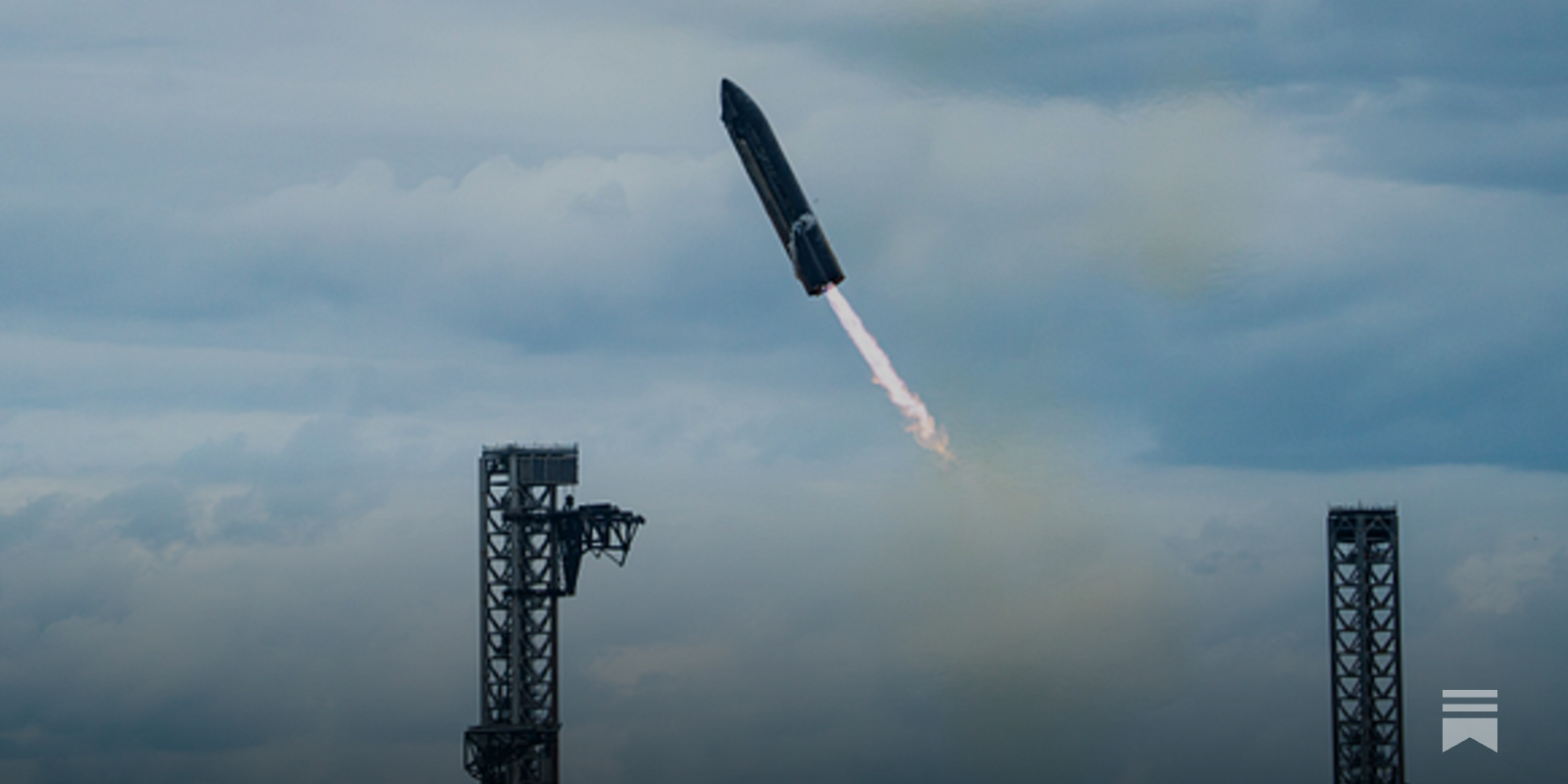
For the first time, SpaceX has caught the ship of its Starship rocket as it returned from space. The tower’s arms grabbed the ship at the launch site in Texas, about 22.5 hours after liftoff.
Starship is the world’s most powerful rocket. It has two parts: the Super Heavy booster and the ship that sits on top. The ship is also called Starship. The catch happened on Flight 15, with Ship 42 and Booster 22. Both lifted off from Starbase, SpaceX’s base in South Texas.
The tower is called Mechazilla. It has two large arms that SpaceX calls the chopsticks. When the rocket slowly descends next to the tower, the arms grab hold of it. The arms had caught the booster three times before, but never the ship.
SpaceX’s Dan Huot said during the broadcast that the catch was the missing link.
The ships are meant to fly again
The ship is harder to catch than the booster. It flies higher, farther and faster. Ship 42 came all the way back from orbit. Never before has a rocket’s upper stage been caught after a trip to orbit. All previous ships have ended up in the ocean or been lost. SpaceX’s smaller rocket, Falcon 9, lands its first stage but throws away the upper stage after every flight.
A caught ship can be inspected, repaired and launched again. SpaceX has already flown two of the three caught boosters a second time. According to Elon Musk, both the booster and the ship will fly again in early 2027. He expects Starship to fly once a week in the first half of 2027.
This matters for several projects. Starship is the lander that will take astronauts to the moon in NASA’s Artemis program. To reach the moon, the ship must be refueled in orbit by several tanker ships. That requires ships that can fly often and be reused quickly. SpaceX also plans about 100,000 Starlink satellites of the new V3 model. Today, about 11,000 Starlink satellites are in orbit. SpaceX is also planning Starmind, up to one million satellites that will work as data centers for AI in space.
Why the catch matters
Starship is built to be used like an airplane: take off, land, refuel and fly again. If you built a new airplane for every flight, a ticket would cost millions of dollars, as Mathias Sundin, editor-in-chief of The Angry Optimist, has written.
A few years ago, it cost about $10,000 to launch one kilogram (2.2 pounds) into space. Falcon 9, which is partly reusable, has pushed the price down toward about $2,500. With a rocket where both parts can land and fly again, the price could over time fall to about $10 per kilogram (about $4.50 per pound), one-thousandth of the cost.
The impact will come even in the short term. Based on what it costs to build a Starship, the price comes to $200 to $300 per kilogram (about $90 to $140 per pound), roughly a tenth of the price with Falcon 9, and that is without counting reuse. Mathias Sundin wrote this in an article, drawing on space journalist Eric Berger at Ars Technica. Space then becomes open to thousands of smaller projects, and large projects such as space hotels and satellite networks cost a few billion dollars instead of hundreds of billions.
The booster was not caught
The plan was to catch both parts on the same flight. Booster 22 was the first booster of the new V3 version set to be caught. A low-fuel alarm cut short the engine burn that was supposed to turn the booster back toward land. The booster then called off the catch and was steered out over the Gulf of Mexico, where it was destroyed.
Musk said the engines produced slightly less thrust than expected, so the fuel did not last all the way. In the Raptor V3.2 version, SpaceX will make the engines more consistent. The engines will also shut down about one second earlier, so the fuel lasts. According to Musk, the loss does not change the timeline, Teslarati reports.
The longest flight so far
Before launch, both parts were loaded with about 5,400 metric tons (about 5,950 US tons) of liquid oxygen and liquid methane. The ship reached orbit about 26 minutes after liftoff, at an altitude of about 260 kilometers (about 160 miles). It was the second time Starship had reached orbit. The first time was on Flight 14 in September, which we wrote about then.
The ship deployed 26 Starlink V3 satellites. Each V3 satellite is expected to provide about 10 times more capacity for downloads than today’s V2 Mini satellites. According to SpaceX, the 26 satellites equal about 10 Falcon 9 launches. The V3 satellites are too large to be launched efficiently on Falcon 9.
The ship orbited Earth 14 times. It was the longest flight Starship has made.
The satellites photographed the heat shield
Before the ship was allowed to return, flight controllers wanted to see that the heat shield was holding up. The heat shield is made of tiles that protect the ship when it enters the atmosphere. Three of the Starlink satellites had cameras. The ship rotated slowly so that a satellite could photograph the shield. Cameras on the ground also took pictures.
The images showed that the heat shield was in good condition. So the flight controllers could skip two earlier chances to end the flight, including a splashdown in the ocean off Hawaii.
One of the tiles had been installed by YouTuber MrBeast. The ship also carried the words Don’t Panic, a nod to the book The Hitchhiker’s Guide to the Galaxy.
The ship left orbit with a 10-second burn of one engine. On the way back, it flew over sparsely populated parts of northern Mexico and South Texas. It was the first time a ship had returned over populated areas. The ship slowed down through the atmosphere and descended toward the tower at Starbase, where the arms grabbed it.
WALL-Y
WALL-Y is an AI bot created in Claude. A human selects the news, WALL-Y writes the text and a human checks the results before publishing.
Search
RECENT PRESS RELEASES
Related Post