2027 Range Rover Electric Launched to Offer V-8 Alternative
September 2, 2026
Stay up to speed with stories written by drivers, for drivers.
Get automotive news, DIY tips, market trends, in-depth car profiles, and more right in your email inbox.
Subject to Hagerty’s Privacy Policy and Terms and Conditions
Years in the making, and a couple of years late, the Range Rover Electric has finally made its debut. While it looks just like the existing gasoline-burning model, its dual-motor all-wheel-drive system is quieter than the V-8, and it delivers more torque.
The first electric Range Rover will arrive in showrooms about five years after its gasoline-burning counterpart, but the brand says the platform that underpins both models was developed with electrification in mind. Put another way, going electric isn’t an afterthought. Power comes from a pair of electric motors (one per axle) that draw electricity from a 118.5-kilowatt-hour lithium-ion battery pack to develop up to 542 horsepower and 627 pound-feet of torque. Hitting 60 mph from a stop takes 4.3 seconds.
For context, the Range Rover takes 4.4 seconds to reach 60 mph from a stop when it’s powered by a twin-turbocharged, 4.4-liter V-8 rated at 523 horsepower and 553 pound-feet of torque. The EV isn’t much quicker than the V-8 in spite of the extra power and torque, but that’s not the point: It’s marketed as being quieter, smoother, and overall more refined than other Range Rover models.


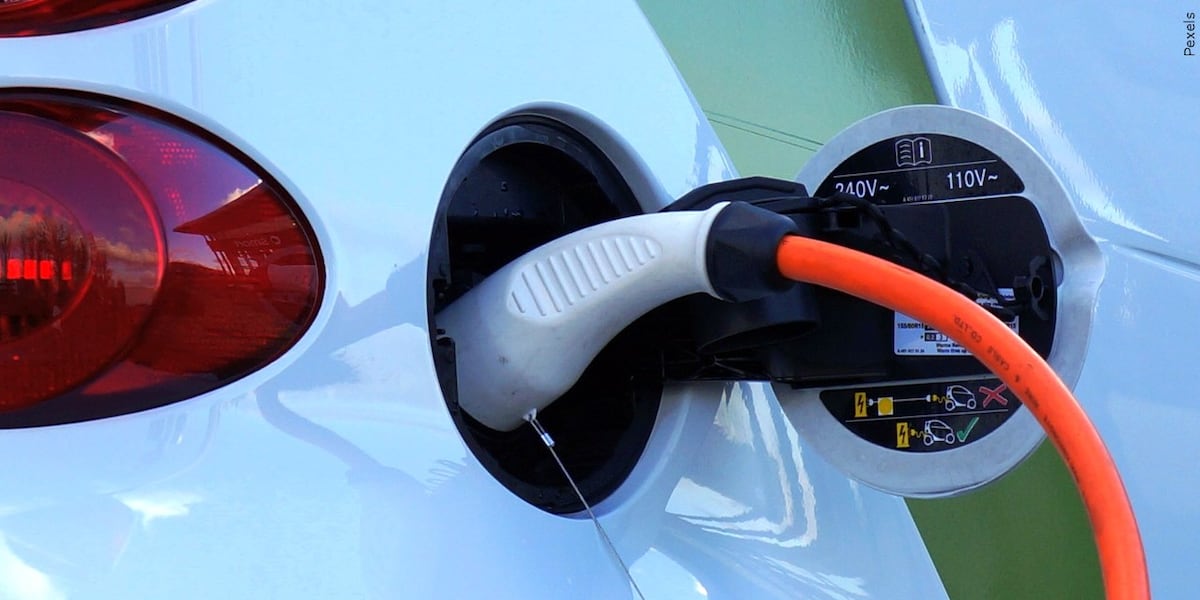
The electric drivetrain is compatible with 350-kilowatt DC fast-charging stations, which can charge the battery from 10% to 80% in about 22 minutes, and owners will be able to monitor the charging process remotely using a dedicated menu in the new Range Rover App. Range Rover quotes a real-world driving range of up to 333 miles, which is about average given the size of the battery. Cadillac’s electric Escalade IQL offers roughly 465 miles of range, but it’s built on a massive, 200-kilowatt-hour battery pack.
Even beyond the battery and the 800-volt electrical system, there’s a great deal of tech packed into the Range Rover Electric. The new Intelligent Driveline Dynamics system manages the torque distribution to ensure that the big SUV always has traction, and the Integrated Traction Management system manages slip quicker than the equivalent technology fitted to the gasoline-burning model. There’s a one-pedal driving mode, too, which allows the driver to smoothly and safely pull away from a stop on a 33-degree slope.
It takes a well-trained eye to tell the Range Rover Electric apart from the other Range Rover models—it doesn’t even get an “EV” emblem on the rear end. It’s offered with a short or a long wheelbase, and it’s available in most of the same colors as the gasoline-powered versions. It’s a similar story inside, with the exception of EV-specific displays in the instrument cluster and touchscreen.


Built in Solihull, England, alongside the gasoline-burning model, the Range Rover Electric is on sale now across the nation with a base price of $138,000. That’s the same price as the twin-turbo V-8-powered version, which likely isn’t a coincidence. It will be the only electric Range Rover when it lands in showrooms, but it will soon be joined by a second, sedan-like model called GT.
EVs are everywhere; most brands offer at least one electric model, but Range Rover explains that planting its flag in the segment required a tremendous amount of effort. The electric Range Rover logged close to a million miles and over a quarter of a million hours of real-world and virtual testing, and the company filed more than 300 patent applications during the development process—that’s an in-house record for a single vehicle. Preparing the battery pack and the electric drive unit was a challenge as well: It required adding 5.5 miles of conveyor belts and 113 miles of power and data cabling to the Wolverhampton, England, factory.

Search
RECENT PRESS RELEASES
Related Post