Rising Risks: Middle East Conflict Strains Global Energy Security
September 2, 2026
Global energy markets are facing instability as geopolitical conflict, demand for electricity, extreme weather and concentrated supply chains place pressure on how countries produce and distribute energy. These disruptions have affected natural gas, oil and electricity markets. Energy security has become a larger concern for governments following several major disruptions over the past five years, including supply chain problems after the coronavirus pandemic, Russia’s invasion of Ukraine, trade restrictions on critical minerals and conflicts involving major energy-producing regions, according to the International Energy Agency (IEA).
An example of global energy vulnerability is the Strait of Hormuz, a narrow waterway connecting the Persian Gulf to the Gulf of Oman and Arabian Sea. Around 20 million barrels of crude oil and petroleum products passed through the strait each day in 2025, representing approximately 25% of the world’s seaborne oil trade, according to the IEA. Qatar and the United Arab Emirates send enough liquefied natural gas through the waterway to account for about 19% of global LNG trade.
Recent conflict in the Middle East sharply reduced traffic through the strait. The U.S. Energy Information Administration (EIA) reported that oil flows through the Strait of Hormuz fell from 21.6 million barrels per day in the fourth quarter of 2025 to 4.9 million barrels per day in the second quarter of 2026. The disruption shows how dependence on a relatively small number of transportation routes can affect energy markets beyond the region where a conflict occurs.
The economic effects have extended beyond oil. The World Bank projected that average energy prices would rise 24% in 2026 as conflict in the Middle East disrupted oil and natural gas supplies. The bank also projected Brent crude oil to average $86 per barrel during the year, $26 higher than its January forecast. Rising energy costs can spread through transportation, manufacturing and agriculture because petroleum and natural gas are used not only as fuels but also in the production and movement of other goods.
Low-income countries can be vulnerable to these disruptions. In an April joint statement, leaders of the IEA, International Monetary Fund and World Bank said the effects of the Middle East energy shock were disproportionately affecting countries that depend heavily on imported energy. Higher prices for oil, natural gas and fertilizer can raise costs across economies and can contribute to concerns about food prices and inflation.
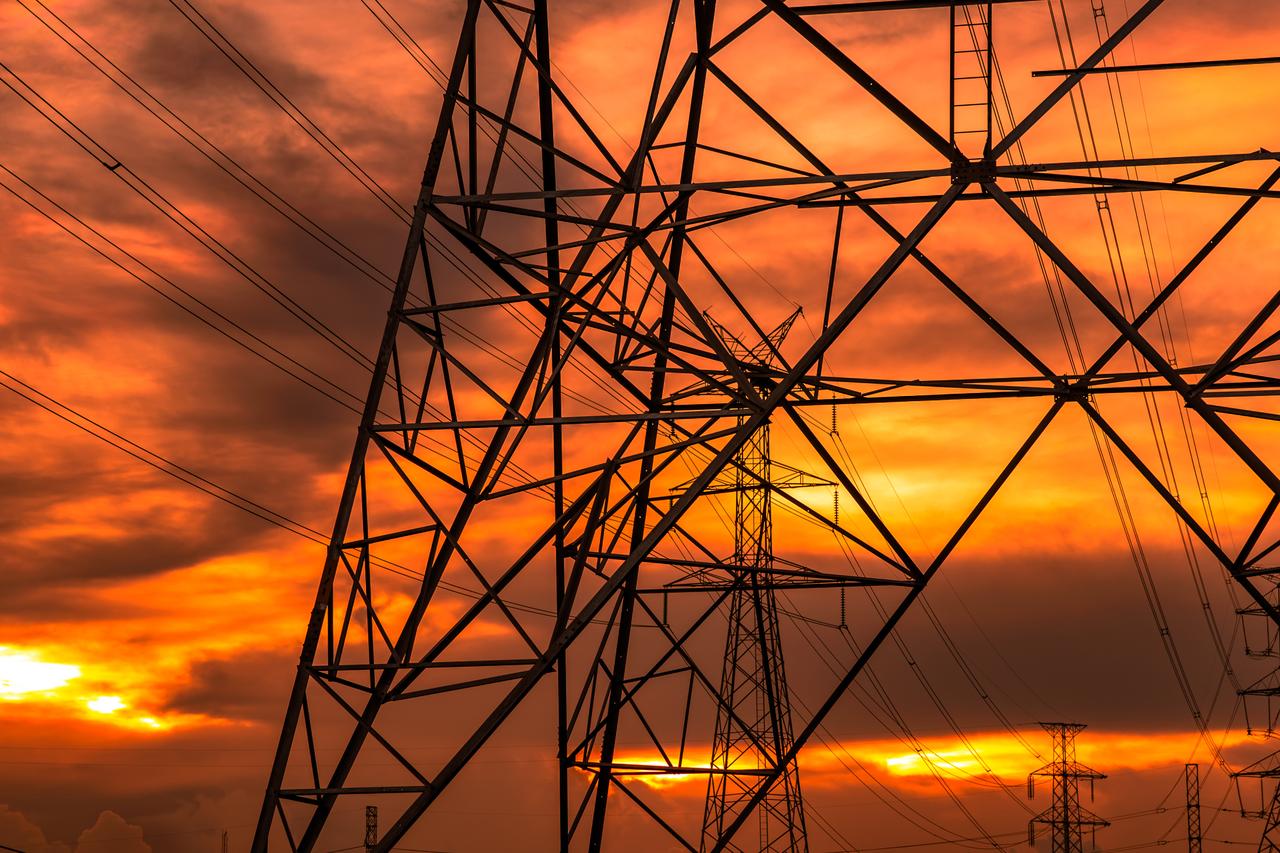
The world is using more electricity. Global electricity demand is forecast to increase by 3.6% in 2026 and 3.8% in 2027 after increasing 3% in 2025, according to the IEA. Industrial growth, electric vehicles, air conditioning, heat pumps, household appliances and expanding data centers are among the factors contributing to higher electricity consumption.
Climate conditions can intensify that pressure. The IEA reported that global electricity demand increased 4.4% in 2024, when intense heat waves contributed to greater electricity use in many regions. Higher temperatures can increase demand for air conditioning at the same time that power systems are already under stress. Extreme weather can also affect energy infrastructure and electricity generation, creating another source of uncertainty for countries trying to maintain reliable grids.
Expanding renewable energy may reduce some forms of energy dependence because solar and wind generation do not require continuous imports of fuels such as oil or natural gas. However, the transition to cleaner energy introduces different supply chain concerns. Solar panels, electric vehicles, batteries and other technologies depend on minerals and manufactured components whose production is concentrated in a relatively small number of countries.
The IEA reported that the largest refining country accounted for an average of 72% of refined supply for major energy minerals, excluding rare earths, in 2025. China dominates the refining of many critical minerals while Indonesia is the leading supplier of refined nickel. Export restrictions have made those concentrations more significant. China introduced export controls on several heavy rare earth elements in 2025, while the Democratic Republic of the Congo introduced restrictions affecting cobalt.
Clean energy manufacturing is similarly concentrated. China accounts for about 85% of solar supply chain production capacity and 80% of lithium-ion battery supply chain capacity, according to the IEA. Its share rises to approximately 95% for photovoltaic wafers and 97% for battery anode materials. Concentration at this scale means that a disruption in one major producing country can affect projects and industries in many others.
These risks do not mean that expanding renewable energy necessarily makes energy systems less secure. Instead, they show that energy security changes as technology changes. An oil-dependent economy may be vulnerable to disruptions at shipping routes such as the Strait of Hormuz, while an economy building large amounts of renewable generation may become more concerned about access to copper, lithium, graphite, rare earth elements and manufacturing capacity.
A more stable global energy system will likely depend on having multiple sources of energy rather than relying heavily on one fuel, country or transportation route. The environmental transition could reduce some of the risks associated with fossil fuels, but it will also require governments and industries to address weaknesses in the technologies and materials that will power the next generation of the global economy.
Search
RECENT PRESS RELEASES
Related Post