Aging Tesla is pricier than a new one in Korea. Here’s how FSD shakes up Korea’s used car market.
September 6, 2026
Explainer
U.S.-built Teslas eligible for Full Self-Driving are commanding premiums over newer Chinese-made models that were shut out of the software rollout.
The basic rule is always that cars lose value over time. But Tesla is breaking that rule — and perhaps nowhere more spectacularly than in Korea.
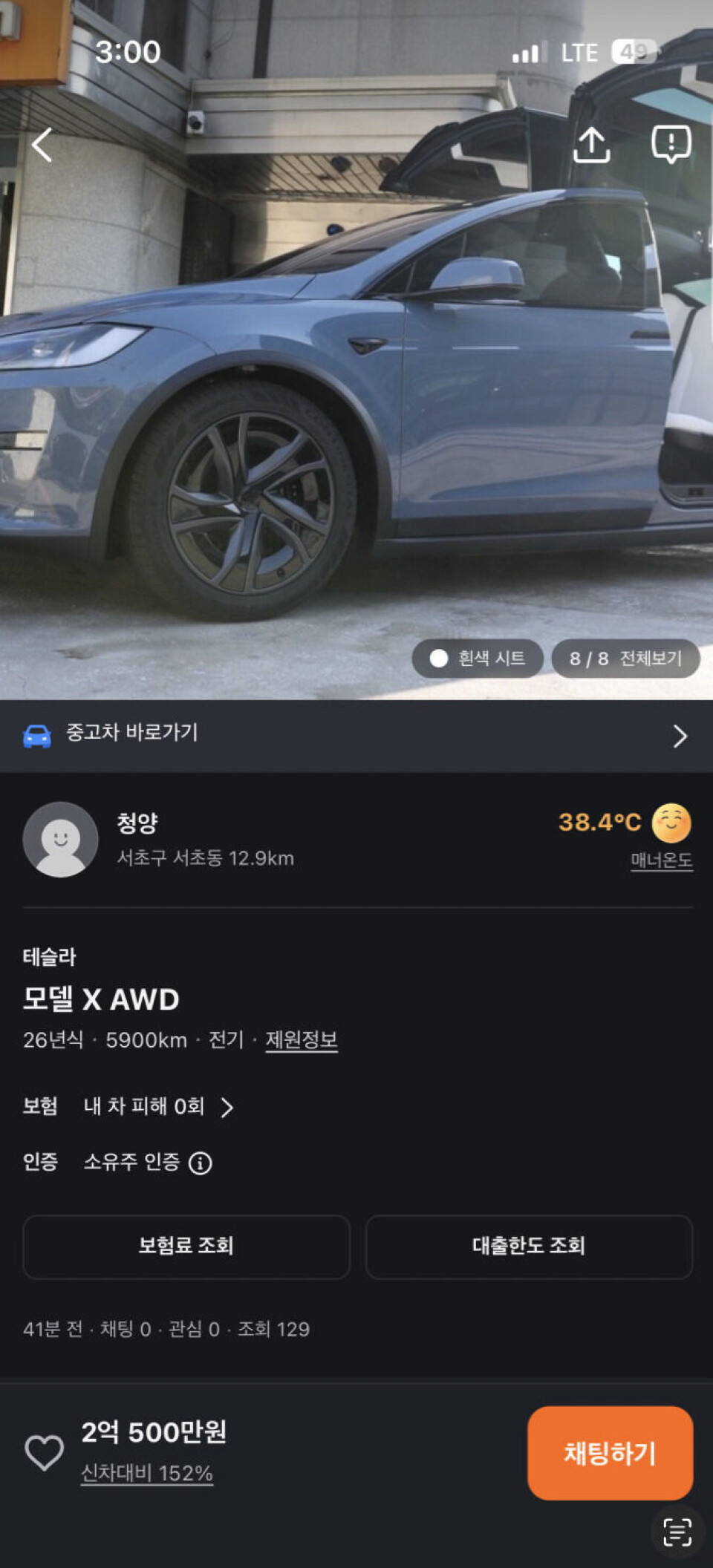
A used Tesla Model X, delivered this past June, is currently listed for 205 million won ($152,000) on Danggeun Market, a platform for secondhand goods. That is more than 50 percent higher that the sticker price of a brand-new version of the same car.
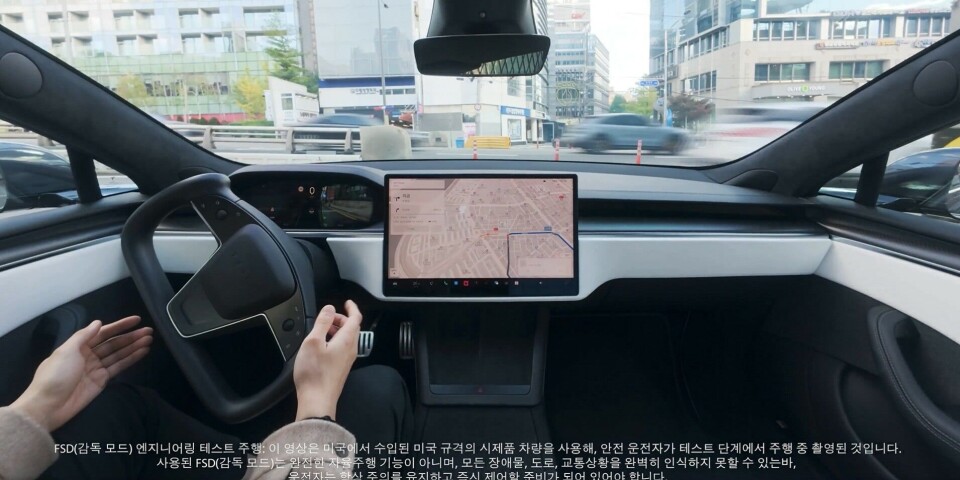
The explanation? This Model X was built in the United States, making it one of the very few options in Korea for operating the company’s supervised Full Self Driving (FSD), which is a Level 2 automated driving system.
The phenomenon is even more pronounced with the cheaper Model Y and Model S — so much so that many Koreans are now hunting for Teslas as old as 2020, five years past their prime, just to get one that qualifies.
“Back in April, when word got out about Tesla’s FSD, a used 2022 Model 3 was going for about 27 million won, and the Model Y for around 35 million,” said Han Jong-won, a salesperson in his early 30s living in Seoul.
“I missed my chance, and now prices have jumped more than 10 million won.” He added. “Every Model 3 or Y you can actually buy new right now doesn’t get FSD. So buying new isn’t really an option.”
What’s behind the rush for older models?
Starting July 10, Tesla began rolling out “FSD v14 Lite” in Korea for U.S.-built Model 3 and Model Y vehicles — a stripped-down version of its newest software built to run on the older Hardware 3 chip. That means cars nearly five years old can gain the feature through a software update alone, with no hardware swap required.
But the update only applies to American-made vehicles sold between 2019 and 2023. The Tesla models that have sold briskly in Korea more recently are Chinese-built units built after 2023, which are excluded from the program entirely.
K Car, Korea’s largest used-car retailer, analyzed average prices across roughly 740 vehicle models sold in the used market within the past decade, and found that Model Y units from 2020 to 2022 rose 2 percent in average value last month, while post-2023 models, mostly Chinese-built, fell 2.5 percent.
On the used-car platform Chachacha, buyer interest in American-made Model 3s jumped from a 10.1 percent to a 15.4 percent registration rate after the FSD v14 Lite rollout.
Is a Korea-U.S. trade deal really the culprit?
It turns out the divide traces back not to engineering, but to paperwork — specifically, the fine print of the Korea-U.S. FTA.
Korea has never formally approved FSD for domestic roads. Yet American-built Teslas get to use it anyway, thanks to a mutual-recognition clause in the trade pact covering automotive safety standards: U.S.-manufactured vehicles can activate the software here without separate certification with no government sign-off required.
That loophole was once capped at 50,000 vehicles a year — but the cap disappeared entirely under a 2025 tariff agreement between Washington and Seoul.
The Korea-China trade agreement contains no equivalent clause, so those cars are stuck waiting on Korea’s own certification process — one that shows no sign of moving quickly.
Model Xs and Model Ss were built only in the United States and both qualified for FSD, which explains their premium pricing.
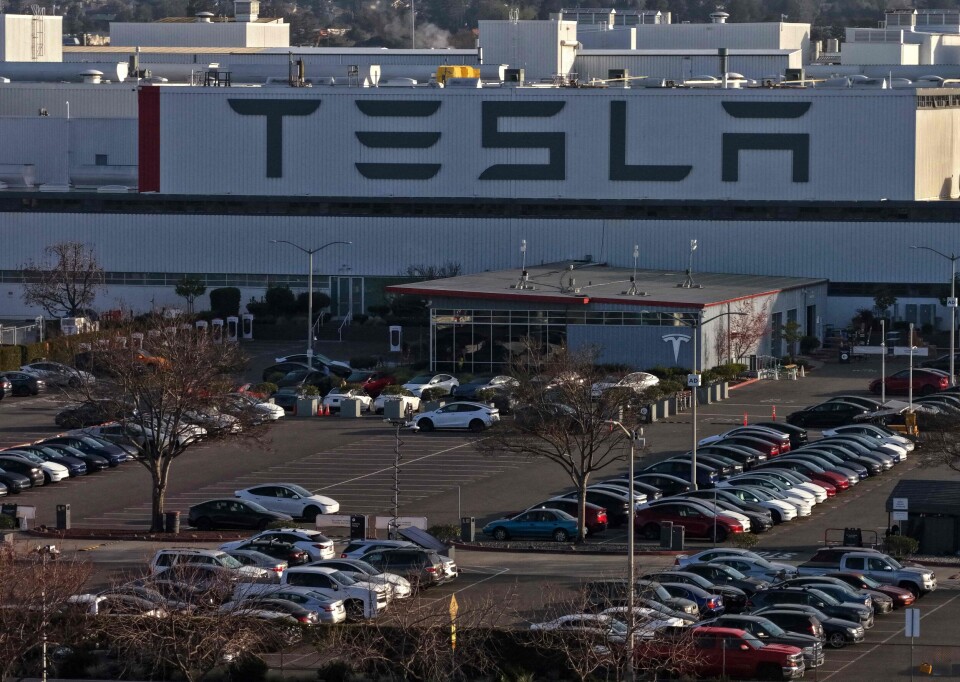
But Tesla halted production of both models in mid-May, converting the relevant line at its Fremont, California, plant to humanoid-robot manufacturing.
“Dealers are fighting hard to secure Model X and S units,” said a dealer surnamed Sung who sells imported used cars in Seoul’s Yangjae neighborhood in southern Seoul. “Between the scarcity and access to the newest FSD, customer inquiries for those two models have surged.”
What about reports of illegal modifications?
As the gap between American- and Chinese-built models has widened, some owners of Chinese-made Teslas have turned to unofficial methods to unlock FSD — connecting unauthorized hardware or manipulating open-source code to bypass the software lock.
Known informally as “FSD cracking,” the process has been documented by owners through online Tesla owner communities and YouTube videos, with some mentioning devices purchased for as little as $20 from Chinese e-commerce sites.
As the practice spread through Korean owner communities, the Ministry of Land, Infrastructure and Transport warned that tampering with safety-related software could constitute an illegal modification under Korea’s law, carrying penalties of up to two years in prison or a 20 million won fine.
Tesla itself has since remotely and permanently disabled FSD on vehicles found using unauthorized activation devices.
Will Korea approve FSD outright?
This is not likely anytime soon. The central obstacle is Korea’s strict restriction on exporting precise mapping data abroad, a policy deeply rooted in national security concerns and which has impeded other tech companies, such as Google, as well.
Tesla’s system relies on centrally aggregating driving data at its global servers to refine performance. But with Korean road data largely excluded from that pipeline, FSD is likely to remain limited to a restricted, Level 2-equivalent capability domestically.
FSD’s actual capability is often regarded as “Level 2++,” an unofficial industry classification that goes beyond the highway-focused “partial automation” to some urban driving.
Transport Minister Kim Yun-duk said the government needs “further discussion” when asked about the possibility of approving FSD in Korea at the 2026 Land and Transport Technology Expo on June 24.
Separately, Korea is developing its autonomous-driving regulatory framework around Driver Control Assistance System, a standard set by the United Nations Economic Commission for Europe.
“Tesla’s autonomous driving still isn’t perfect and that’s precisely why it remains stuck within Level 2 rather than reaching Level 3, with subclassifications proliferating,” said Lee Hang-gu, an automotive professor at Pyeongtaek University. “Too many sensitive issues around safety and responsibilities after an accident remain unresolved.”
BY SARAH CHEA [chea.sarah@joongang.co.kr]
Search
RECENT PRESS RELEASES
Related Post