China Energy Transition Review 2026
September 7, 2026
China’s energy transition is entering a more demanding phase, in which clean electricity begins to take over roles long held by fossil fuels across power generation, system balancing and the broader economy. New challenges come with it, and the near-term path is likely to be uneven as the policy toolkit adapts. But the momentum is increasingly anchored in a “growing-by-greening” dynamic that turns each step of the transition into a source of strength for the next. That is what should carry it through the rougher stretch ahead.
Two stories, one transition
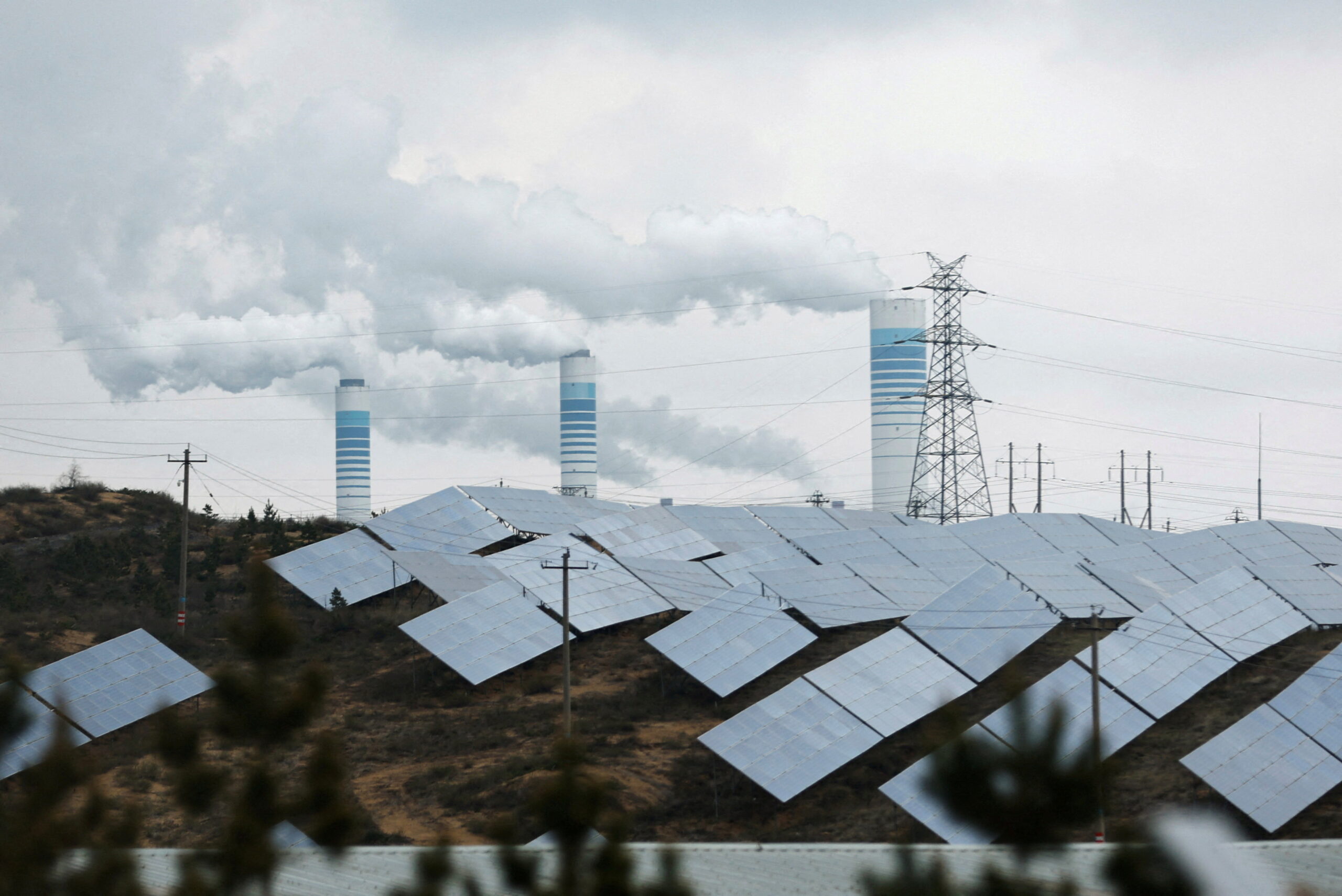
China’s energy transition is often told in two very different ways. One points to the country’s world-leading expansion of wind and solar power, electric vehicles (EVs) and battery storage, viewing this as evidence that the transition is gaining real momentum. The other points to continued growth in coal-fired power capacity and argues that this is not a genuine transition, but simply addition – clean electricity being layered onto a fossil-fuel system that is still expanding.
The apparent paradox has deep roots. China’s economy, like many others, was built over decades around fossil fuels, with energy supply, industrial processes and transport networks all designed around their use. The scale of that dependence is why the transition is not a narrow energy switch but a broader economic shift – rebasing a large and complex industrial economy on a cleaner electric foundation, akin to repowering a massive ship while it is still at sea.
Seen this way, the two stories are two views of a single process: the take-off phase of “building before breaking” (先立后破), in which the new system is building the scale and depth before it can carry more of the load and begin displacing the old.
A deeper shift is underway
So where does China stand in this process today? Is it still primarily expanding the new system alongside the old, or has the new system begun to put more direct pressure on the fossil-fuel system it is intended to replace?
Developments in 2025 and early-to-mid 2026 point to a deeper shift. The new system is beginning to take over functions long performed by fossil fuels — across power generation, system balancing and the wider economy.
In 2025, clean power met all of China’s growth in electricity demand, pushing thermal generation, mostly coal-based, down for the first time in a decade. This is not a one-year anomaly: on a 12-month moving average, coal generation has been stalling since early 2024, after years of continuous expansion — a sign of a longer-term shift.
China’s clean balancing architecture is scaling rapidly, led by a battery-storage surge: around 60% of the world’s new battery storage was installed in China in 2025, an 84% year-on-year rise. Longer-duration options such as compressed-air and thermal storage are beginning to take off too. With average utilisation roughly doubling between 2022 and 2025, these are becoming a real source of clean flexibility, reducing the need to lean on coal.
On the demand side, electrification is taking root across the wider economy. In industry, it is already well advanced in light manufacturing — machinery, electronics, textiles — where electricity supplies about three-quarters of final energy, and is now reaching harder sectors like metals smelting and non-metallic minerals. In transport, China’s rapid EV uptake in passenger vehicles is well known — but the shift is now moving fast into harder segments, with electric models already making up around a quarter of new truck sales.
The “old” system is beginning to register the shift
With that progress, the effects are beginning to show in the fossil-fuel system. In a country as large and complex as China, major change rarely starts in the national aggregate but emerges first across provinces and sectors.
At that level, multiple signs suggest that fossil-fuel peaking is increasingly coming into view. Coal generation is flattening in 17 of the 26 provincial-level regions tracked in this report, together accounting for more than half of national thermal capacity.
Fossil-fuel use has also fallen substantially from previous peaks in relatively easier-to-electrify manufacturing sectors such as machinery, textiles and food and beverages. These sectors account for a relatively modest share of industrial energy use compared with China’s energy-intensive sectors. More importantly for the next phase, early signs of flattening are now appearing even in these harder sectors, such as metals smelting and processing.
Search
RECENT PRESS RELEASES