Facts on the ground
September 7, 2026
Two things matter now: votes, and solar panels. (And wind turbines. And batteries)
This will be an account of where we stand—mostly with regard to the new and much-touted UN report on climate change. But since it’s Labor Day, traditionally the start of fall campaigning (a quaint and lovely notion that), let’s start with the midterm elections. Where we stand is: all the polling shows Americans ready to vote out as many Republicans as gerrymandering allows. We’ve done our job over the last 22 months, driving up Trump’s negatives (with plenty of help from him) and making MAGA electoral poison.
Now we have to turn that into facts on the ground, with votes, and wins, and actually putting good people in Congress where they can begin to staunch a bit of the damage. Which means the next 56 days need to be real, practical effort. This newsletter may be a little unpredictable in its timing, because I’m going to be on the road in swing states, helping Third Act and GrayPac in close races; you can help too, by signing up to phonebank or door knock or fundraise or the other chores that add up to electoral success (and this time around, I fear you need to sign up for “election protection” chores as well, something that shouldn’t be necessary but is). If for some reason you’re finding yourself in need of words from me, you’ll be able to hear me helping out the wonderful Ayana Johnson at her podcast all fall—it’s a season totally focused on climate and the midterms, and it begins tomorrow when we talk with Leah Stokes. (I’ll send a special email in the morning, with the link).
And now on to the major climate news of the moment, which is the report from the UN detailing the fact that we’re not going to hit the 1.5 degree climate target we set in Paris. I assume that this came as shocking news to exactly no one who reads this newsletter regularly; it was clear even in Paris that it represented a target that only a combination of extremely aggressive national policies and lots of scientific luck could hit, and it’s been very clear for years that we’ve been blessed with neither. I think it is very likely that we’re going to temporarily cross the two degree line during the hottest phase of the now-developing El Niño (by some measurements now on track to be the strongest in a millennium), and as I’ve been writing for a long time, our current trajectory is taking us toward three degrees Celsius, and quite possibly higher.
The term we’ve been using for this condition is “overshoot,” and so indeed we’ve overshot the 1.5 degree target. But in fact we’ve been in “overshoot” for decades now. In 2008 I helped start 350.org, which took its name from the co2 concentration—350 parts per million—scientists said was the upper limit for any kind of safety. We passed that in the spring of…1986, which by my back-of-the-envelope calculation would be…40 years ago.
The danger with reports like this new one from the UN is that they may shock some people into thinking we’re living in a suddenly different world with suddenly different requirements. Chico Harlan wrote a perfectly fine piece about the UN document for the Times, but he was ill-served by whoever furnished the headline:
Climate Goals Missed, U.N. Says World Must Now Remove Carbon at Scale.
There are two problems with that formulation, and one is that it misses the thrust of the UN recommendations. As the aforementioned Ayana Johnson points out, in the most cogent summary of the document I’ve read,
CDR (planting trees + some much higher tech stuff that’s not yet proven at scale) is a big focus of this report, but UNEP is very clear that it’s not a silver bullet. And it’s certainly not a get out of jail free card for continuing to burn fossil fuels. In their words:
“Overall, even optimistic CDR scaling is unlikely to deliver a temperature reversal beyond a few tenths of a degree this century. This emphasizes the importance of focusing on reducing greenhouse gas emissions now.”
And the reason that the U.N. is clear that it’s not a silver bullet is that “Now,” to use the word from the NYT headline, we have no idea how to do it at scale. I mean, the Netherlands yesterday announced that it had opened the “largest carbon capture facility” in Europe. Here’s how the company involved put it in a press release:
Yara Sluiskil, Europe’s largest ammonia and fertilizer plant can capture and liquefy up to 800,000 tons of CO₂ annually from ammonia production thereby avoiding carbon taxation on these volumes. The CO₂ will be transported by ship to Norway, where it will be permanently stored beneath the seabed by Northern Lights.
Important to note the “up to 800,000 tons,” because so far these systems have had abysmal success in meeting even their own Lilliputian goals. And for context, Europe produces 3.3 billion tons of greenhouse gases annually, and that in turn is about six percent of the world’s total, so this is a hair on a mole on the quite ugly backside of the world’s hydrocarbon system. So far, the main use of this technology is precisely to allow us to go on burning fossil fuels. As the Yara press release continued, in the measured tones of those who don’t want to quite blow their own cover
The technology makes it possible to reduce emissions from energy intensive industries like fertilizers, ammonia, cement and waste management while maintaining production, jobs and value creation in Europe.
It is entirely prudent to keep researching and testing carbon capture technology—someday it may be part of the solution to the greatest problem humanity has ever faced. But as for “Now,” well, there is actually one thing we do know how to do, and that is build out lots of cheap solar, wind, and batteries. Doing this makes sense because it can displace fossil fuels (solar-heavy California is using 50 percent less natural gas than it was three years ago to produce electricity), and because it’s cheaper than the alternative, and because you don’t have to go to war to procure sunshine, and because wind turbines don’t fill your lungs with particulates. As the UN points out, there’s simply no way around it—net zero may be politically controversial, but it’s physically required, “an essential milestone that cannot be skipped.”
Indeed, as the UN points out,
Accelerating the renewable energy revolution is crucial. On the supply side, limited-overshoot scenarios suggest scaling renewables to 60–70% of global electricity generation by 2030, supported by grid expansion, storage and demand flexibility
We’re already doing this to some extent, of course—a far far greater extent than we’re scrubbing carbon from the atmosphere. But we could be doing it far faster—the Chinese are closing down solar factories to raise the price of the panels, and a new study from the Institute for Energy Economics and Financial Analysis finds that India is using less than half of its solar-panel factory capacity.
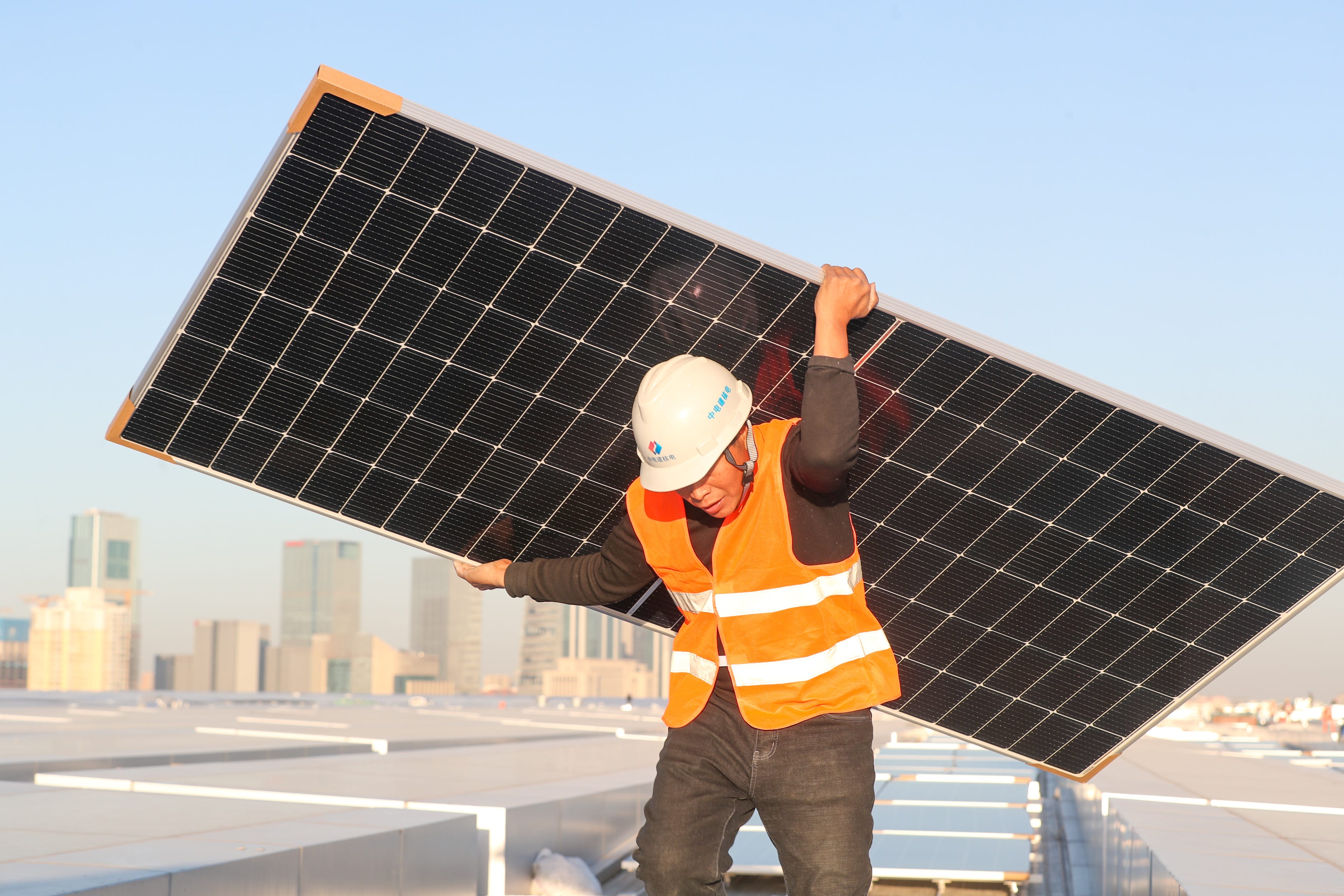
It is therefore entirely possible to imagine a worldwide campaign, led by the UN, to double or triple the pace at which we’re putting up solar panels around the world, and coupling them with the wind turbines and batteries that make them fully functional in every season.This is in fact the one thing we could actually be doing at scale and right now that really responds to the numbers about climate overshoot. It is why we’re busy preparing for Sun Day next summer.
Even that doesn’t “solve” the problem—nothing “solves” the problem—but it would reduce the ultimate temperature we are going to hit on this planet, and it would reduce the eventual amount of carbon some future people are going to have to figure out how to pull out of the sky. Remember—every tenth of a degree that the temperature goes up moves 140 million people into a more dangerous climate zone.
Building clean energy is much more likely, and much more effective, if we’re also shutting down dirty energy. The UN, under Antonio Guterres, has been consistently and powerfully calling out banks and other investors for continuing to fund fossil fuel projects, and the new report is no exception. Again, Johnson highlights the key paragraph:
“Avoiding carbon lock-in in infrastructure is central to this effort. Investments in long-lived, high-emission infrastructure, such as fossil-based power plants, transport systems and industrial facilities, can constrain future emissions reductions and lock countries into high-carbon trajectories (Seto et al. 2016; Smith et al. 2019a). Existing and planned fossil fuel infrastructure alone could exceed the CO2 emissions consistent with 1.5°C in 2030 by 120%.
The possibilities were tantalizingly displayed in China this summer, where new data shows co2 emissions fell one percent. As Lauri Myllyvirta pointed out,
The country’s use of oil fell by 9% overall and by 16% for transport, after the disruptions to supply from the Gulf through the strait.
But it could have been far better. As the Centre for Energy on Research and Clean Air documented last week, China has built a lot of coal power for backup, but too often they’re using it instead of the clean energy they’ve built in such abundance.
Estimated wind and solar curtailment, including both reported and unreported curtailment, reached 360 TWh in H1 2026, up 49% year-on-year. Had this electricity been absorbed, the additional power supply could have met all demand growth and allowed coal power generation to fall.
The problem in China is long-term contracts that continue to reserve a “substantial share of limited electricity demand for coal.” They’re protecting the industry, at the cost of the climate, something that should be highly familiar to Americans, because under Trump we’re subsidizing ancient coal plants instead of shutting them down, and even, as of this summer, spending big to build new ones.
And all of this brings us inextricably back to where this essay began, which is with politics. If the US is to play any kind of role (except as obstacle) in this transformation, it begins with resetting the politics around energy and climate. And that begins with the upcoming elections.
A Democratic Congress will not be able to pass important new climate programs—those would be blocked by the Trump White House. But it might be able to use its oversight and budget authority to blunt the worst of the administration’s attack on clean energy. And if the Democrats start to stabilize the country, then they can turn their attention to the next election—one where energy and climate will need to play a central role, because among other things “affordability” is a dead letter without addressing them.
Which is why the next eight weeks (precisely) are so crucial. We’ve overshot—and not just in terms of climate. We need to start reining the horrors back in, so we can go to work not on solving them but at least on keeping them from destroying all that we’ve inherited. I hope you’ll figure out ways to join me in helping make Nov. 3 the most useful day of the last few years. Usefulness may not be sexy, but it’s what we’ve got.
In other energy and climate news:
+Just in case you needed another major wake-up call from the UN, they published a new report on sea level rise last week. It found that
the annual rate of sea-level rise has more than doubled in recent decades, accelerating from 2.1mm per year in 1992 to 4.5mm per year in 2024 – and projections indicate this will surpass 10mm per year by the end of the century
In the words of wise climate veteran Bill Hare, who helped prepare the report,
“Because of serial failures to reduce fossil fuel use by the world’s richest and biggest emitting countries, all coastal countries, and the small island developing states in particular, face a future of steadily rising climate impacts which in most cases they have done little to cause.”
+As I’ve noted in the past, it’s likely that the growth in electricity demand for air conditioning on a rapidly warming planet will be far greater even than the growth from data centers (and considerably more vital). A new study from the London School of Economics last week provided some numbers
Electricity demand for cooling and heating will increase significantly in all regions: global per capita electricity demand for heating and cooling is projected to increase substantially (13%) by the middle of the century, with all regions seeing increases due to the widespread adoption of both air conditioning and electric heating.
Peak demand increases during temperature extremes are much larger than average effects over the year: increases in peak demand (24%) are roughly double those for average demand, highlighting how prior work that has focused on average consumption understates the grid capacity investments that climate change adaptation and mitigation will require.
Meanwhile, in California, the governor has decided to reclaim money from a public school air conditioning program and hand it back to the utilities. As Alejandra Reys-Velarde reports
The California Schools Healthy Air, Plumbing, and Efficiency program — CalSHAPE for short — set aside nearly $1 billion in utility funds to help schools assess and upgrade aging HVAC and plumbing systems. But the California Energy Commission abruptly closed applications in 2024, leaving $191 million unused — money that must now be returned to utilities by law.
After last-minute negotiations, lawmakers passed a budget trailer bill giving schools that had already received funding an additional three years to finish projects before the state claws back the money. But they dropped a separate measure that would have re-opened applications for schools to make upgrades because it did not have support from Gov. Gavin Newsom, according to sources familiar with the negotiations.
“I don’t understand why (Newsom) doesn’t have the backs of everyday people in California, and why he doesn’t think that children deserve a safe place to learn with air conditioning,” said Leah Stokes, a political science associate professor at UC Santa Barbara who has advocated for the program. “This is all on him.”
Gavin Newsom is going to have a hard time winning the support of clean energy activists as he sets out on his 2028 presidential campaign.
+A scorching summer in France is set to reduce champagne production in half, to a seventy year low, Melina Wǎlde reports. Save what you can for Nov. 3, just in case we have something to celebrate
+As he celebrated a brand new form of the Catholic Mass focused on the “care of creation,” Pope Leo called on his 1.4 billion followers to assume “the responsibility that we bear both personally and collectively for preserving the original harmony” of the world. As Justin McLellan reported,
The Vatican’s liturgy office promulgated the Latin text of the new formulary last year. But English and Spanish translations were approved only last month (August), making this the first year in which Catholic communities in the United States can celebrate the new Mass during the Season of Creation — a monthlong period devoted to prayer and action for the care of creation which runs from Sept. 1, the World Day of Prayer for the Care of Creation, through Oct. 4, the feast of St. Francis of Assisi.
Meanwhile, check out Leo’s spiffy new green vestments

+From Ingmar Rentzhog, a compelling essay on what he calls the “biggest lie” in the world”: “we have more time.” Writing from Europe, he says
“Our politics still speaks in the future tense, and our leaders act on the tense, not the facts. This summer, while three heatwaves hit Europe in three months, I documented 45 climate policy reversals in one year, across 15 jurisdictions, six of them landing during the heatwave itself. Not one of those decisions is possible without the four words. Nobody weakens a carbon market or reopens Arctic oil blocks while believing we don’t have time. Every reversal is the lie, written into law.”
+Nicholas Kusnetz reminds us that the Trump administration has spent huge amounts of our money promoting the export of liquefied natural gas, which in turns causes us to spend huge amounts more of our money paying for more expensive gas here at home. If there’s one single underlying principle of the administration, it’s: export more LNG.
The unprecedented federal support comes as LNG growth is reshaping the nation’s energy and climate future. Exports are the fastest-growing source of demand for U.S. natural gas, and they are driving a rise in drilling that has pushed production to a record high. By 2050, gas exports are expected to more than double, the Energy Information Administration said, helping push natural gas production potentially 20 percent to 40 percent higher than today.
The expansion comes at a time when the impacts of accelerating climate change are becoming deadlier and more costly, driving wildfires, heat waves and storms across the globe. Meanwhile, the LNG boom is sending a surge of new pollution into the Louisiana and Texas communities where it is concentrated.
“This massive buildout of LNG is extremely harmful from both a climate and a public health perspective,” said Talia Calnek-Sugin, a senior policy advocate at the Natural Resources Defense Council.
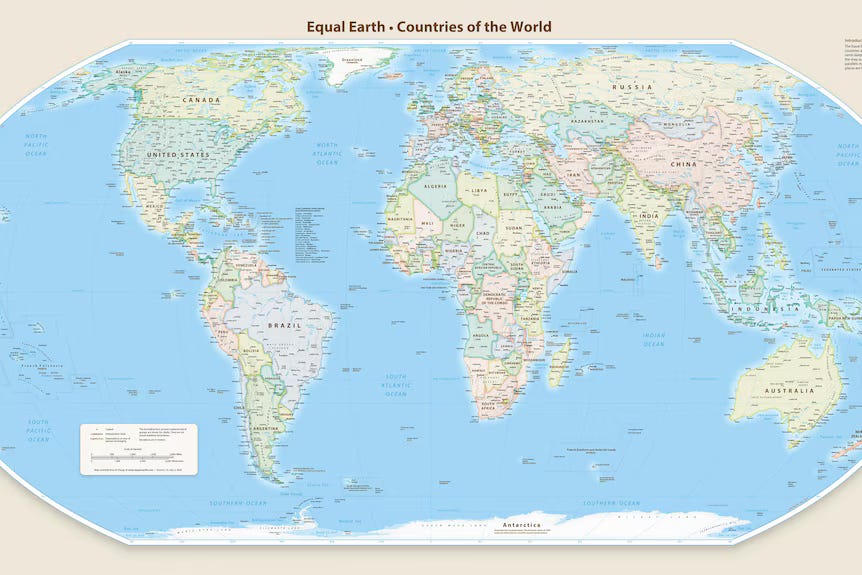
+The cause of reality—which in our world is very much a cause, not a given—took a small step forward last week when the UN voted (with one dissent, and you can guess who it was) to replace Mercator projections of the earth with a new map showing the continents in their correct relative size. As Eromo Egbejule writes,
Togo, which spearheaded a campaign for the resolution on behalf of the African Union, said the resolution “recognises and affirms that disproportionate cartographic representations, particularly those resulting from the Mercator projection, have had lasting cognitive, educational, cultural, geopolitical and socioeconomic effects, contributing to a drastic reduction in the perceived size of Africa and other regions of the world in the global collective imagination”.
Speaking before the resolution passed, Robert Dussey, Togo’s foreign affairs minister, said: “This discussion is not a political discussion [but] a scientific discussion, because there is scientific proof so we all have to accept the reality.”
In the new map Greenland shrinks enormously, not from losing ice but just from readjusting perspective. And the U.S. get somewhat smaller, which we can only hope
+The world now has 280 million electric bikes and mopeds, and they’re cutting far more oil demand than the 20 million or so electric cars. As Muhammad Azhar and Waqas Uzair describe,
they are actually displacing four times as much demand for oil as all the world’s electric cars at present, due to their staggering uptake in China and other nations where mopeds are a common form of transport.
and the reason for their rapid uptake in the poor world is pretty obvious
If you commute on an e-bike 20km a day, five days a week, your charging cost would be about $20 – annually.
+A new study attempts to quantify the effects of fossil fuel pollution and wildfire smoke on classroom learning, and the numbers are stark
A year of observed pollution exposure reduces learning by 0.04-0.06 standard deviations, or 14-19% of typical annual score growth. The damage comes almost entirely from moderate pollution days (8–12 μg/m3), below the EPA’s historical standard, and from exposure during the school year rather than summer, pointing to instructional disruption as a mechanism. Effects are three times larger in disadvantaged schools and among Black and Hispanic students, who are harmed more by the same exposure. Exposure to air pollution widens achievement gaps.
+While America attempts to hide climate science, Canada plows ahead with reporting the dismal truth (even as it also plows ahead with new pipelines.) Here’s the data from the country’s new National Climate Assessment, as explained by David Thurton
Canada is projected to warm through this century with an estimated temperature increase of 5 C by 2081 to 2100. In Nunavut, warming in winter could exceed 10 C.
Glaciers in western Canada are projected to lose more than 75 per cent of their ice, it finds, and there’s a more than 60 per cent likelihood that the central Arctic Ocean will be ice-free most Septembers.
“Iconic landscapes are changing across Canada as snow and ice disappear,” the report states. “Glaciers in western Canada will largely disappear by the end of this century.”
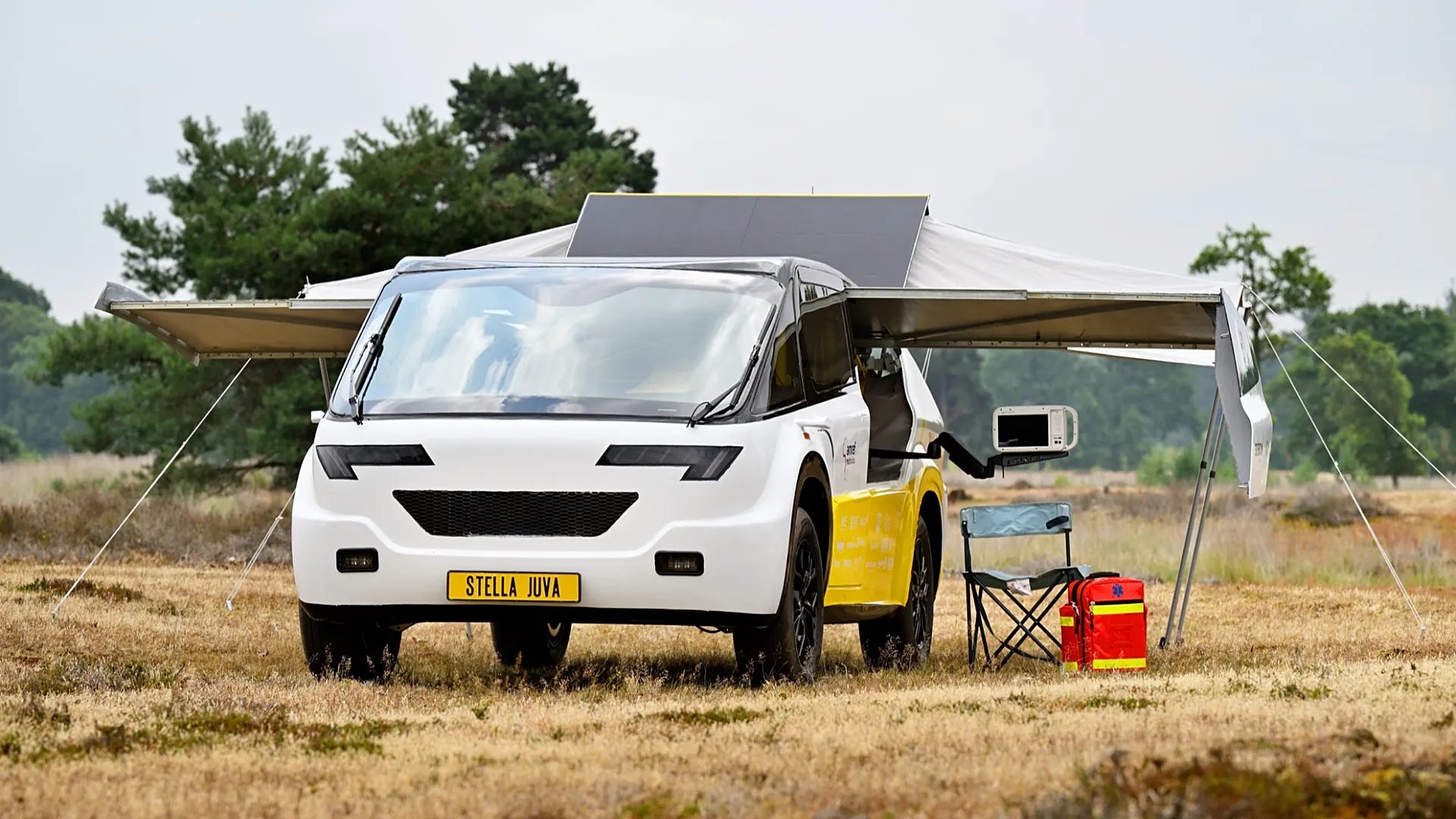
+The world’s first solar powered ambulance has taken to the road, Liam Gilliver reports
Energy generated from the sun is stored in a 50 kWh battery, allowing the ambulance to safely keep driving and deliver healthcare in remote areas – which often lack reliable infrastructure, electricity and fuel options – even when the sun has gone down.
Unlike traditional ambulances that pick patients up and transport them to a hospital, Stella Juva brings healthcare directly to people in need.
“When a healthcare professional arrives at a dispensary, they are able to extend solar panels from the side of the ambulance,” Yarno Basten of Solar Team Eindhoven tells Euronews Earth.
“This helps generate extra energy and provide shade for delivering healthcare. While stationary, the ambulance generates more solar energy than the medical equipment uses. This means that healthcare workers can keep using medical equipment at all times.
Search
RECENT PRESS RELEASES