Hidalgo Private Investment Reaches MX$147.7 Billion
September 1, 2026
Summary: Hidalgo is emerging as a major industrial investment destination in Mexico, combining MX$147.697 billion in private investment commitments across 130 projects with the country’s fastest state-level economic growth in the first quarter of 2026. Infrastructure projects, manufacturing expansion and sector diversification are strengthening the state’s investment proposition, although reliable energy and water capacity will be critical to converting commitments into long-term industrial operations, jobs and productive capacity.
Hidalgo is strengthening its position as an emerging industrial investment destination after accumulating MX$147.697 billion in private investment commitments across 130 projects, supported by rapid economic growth, expanding infrastructure and efforts to diversify its industrial base.
The state recorded annual economic growth of 8.2% during 1Q2026, the highest rate among Mexico’s states, according to data from the National Institute of Statistics and Geography (INEGI). Construction increased 40.6%, while manufacturing expanded 7.9%, reflecting the combined impact of infrastructure development and new productive capacity.
Industrial activity in Hidalgo grew 16.5% during the first quarter, according to figures presented by state authorities based on INEGI data. The performance comes as the state seeks to convert public infrastructure investments and private capital commitments into long-term industrial expansion.
Pau Messenger, Chief Economist at Banco Multiva, said during a business forum that manufacturing growth reflects greater utilization of installed productive capacity as well as new capacity associated with recent investments.
Infrastructure Supports Industrial Expansion
The state’s economic growth is closely connected to an expanding infrastructure pipeline that is increasing connectivity and supporting industrial development across Hidalgo.
Construction activity has been driven by projects involving transportation, urban development, telecommunications and energy. These investments generate an immediate economic effect through demand for workers, construction materials and suppliers, Messenger said, while their longer-term value depends on whether companies use the resulting infrastructure to expand productive activities.
The Mexico City-Pachuca Train is among the state’s largest infrastructure projects. According to information presented during the forum, the project is approximately 37% complete and represents an investment of about MX$44 billion.
Between 2022 and 2026, Hidalgo allocated MX$25.272 billion to infrastructure. Road infrastructure accounted for MX$10.128 billion, followed by MX$6.616 billion for public spaces, MX$5.239 billion for water infrastructure and MX$3.046 billion for urban roads.
The investments are intended to improve the conditions required for industrial and commercial activity while strengthening connections between production centers, population hubs and markets.
Private Investment Pipeline Expands
Public infrastructure development is being accompanied by a growing pipeline of private projects, providing a broader base for Hidalgo’s industrial expansion.
The state has accumulated MX$147.697 billion in private investment commitments distributed across 130 projects, according to figures updated in August. The projects are expected to generate more than 191,000 direct and indirect jobs.
Of the total pipeline, 75 projects are already operating, 23 are under construction and 22 are in planning stages or undergoing permitting processes.
Governor Julio Menchaca has previously said that Hidalgo accumulated approximately MX$147 billion in investment commitments during his administration, positioning the state among Mexico’s increasingly active destinations for industrial capital.
Recent announcements have added to that pipeline. Cooperativa La Cruz Azul and DEWA Capital announced projects representing more than MX$16.6 billion in additional investment commitments and expected to generate more than 19,000 direct and indirect jobs.
The announcements reinforce investment activity around industrial corridors including Tula and Zapotlán, where infrastructure development and industrial projects are increasingly converging.
Cruz Azul Revives Tula Manufacturing Capacity
Investment in Hidalgo’s traditional industries is also supporting the state’s broader effort to increase manufacturing capacity and employment.
Cooperativa La Cruz Azul announced a MX$6.5 billion investment to reactivate and modernize its cement plant in Tula de Allende. The project is expected to restore annual production capacity to 3 million tons and generate approximately 14,200 direct and indirect jobs, reported MBN.
The investment includes MX$1.8 billion for renovation and reconditioning work already underway and MX$3.7 billion for a new production line that has reached 85% completion.
The cooperative has also reported more than MX$1 billion in investments to modernize its hospitals and surgical facilities.
Carlos Henkel, Hidalgo’s Minister of Economic Development, said productive diversification is one of the state’s main strategies for expanding investment opportunities while building on industries that already have an established presence.
Hidalgo has significant activity in the automotive, cement, food and beverage industries. State officials noted that six of Mexico’s major cement companies have operations in Hidalgo, highlighting the sector’s importance to the local industrial economy.
New Industries Drive Diversification Strategy
While traditional industries remain important, Hidalgo is targeting sectors linked to Mexico’s energy transition, advanced manufacturing and growing technology infrastructure.
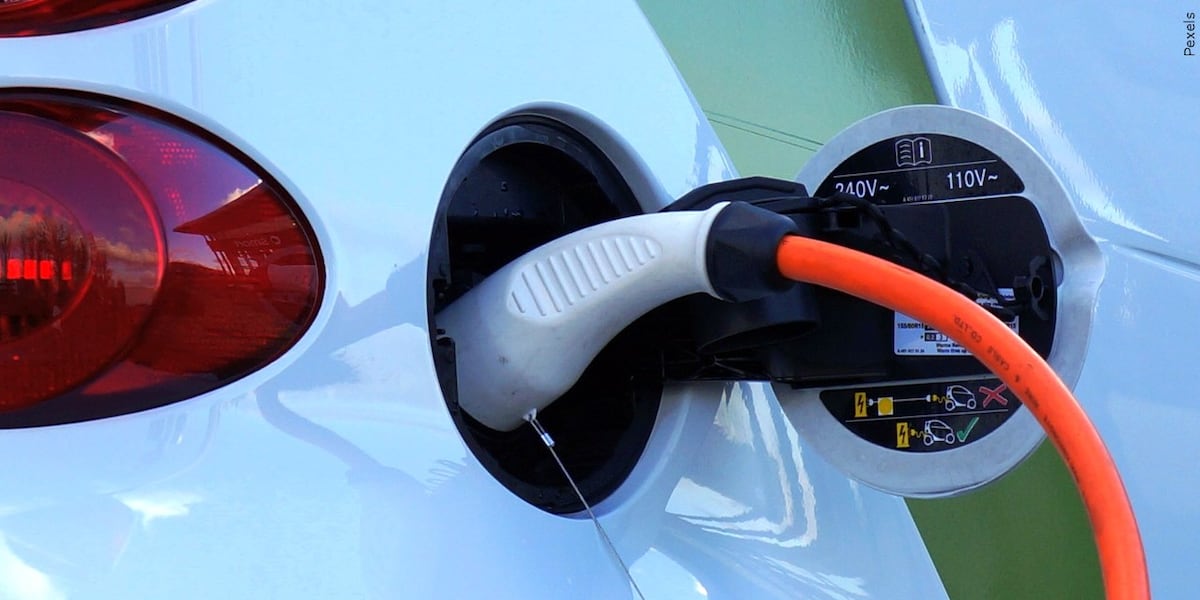
State officials identified electromobility, electrical equipment and photovoltaic energy as areas with expansion potential. Pharmaceutical manufacturing, medical devices, logistics and aerospace are also part of the state’s diversification strategy.
Henkel said Hidalgo is also working to attract data center projects, which would require expanded access to electricity and water.
Energy infrastructure is becoming increasingly important as manufacturers and technology companies evaluate new locations. Messenger said infrastructure alone does not guarantee sustained economic growth, emphasizing that industrial parks, transportation systems and other assets must ultimately attract productive investment.
“Having an industrial park or a train is of no use if investment does not arrive,” Messenger said during the forum.
The challenge for Hidalgo will be converting its infrastructure investments into operating facilities and sustained productive capacity.
Energy and Water Capacity Remain Key
The next stage of Hidalgo’s industrial strategy will depend heavily on expanding energy and water infrastructure to support new facilities and larger industrial operations.
One of the projects under consideration is a photovoltaic park with approximately 100 megawatts of capacity at the Zapotlán Economic Development Pole for Wellbeing. The project is intended to strengthen electricity availability for companies locating in the area, reported MBN.
State authorities are also working to expand water supply to industrial zones, including plans for a new water pipeline to meet demand from industrial parks.
The availability of reliable electricity and water is increasingly important for industries ranging from manufacturing and electromobility to data centers and advanced technology facilities.
Hidalgo’s combination of rapid economic growth, infrastructure spending and a MX$147.697 billion private investment pipeline gives the state an expanding foundation for industrial development. The longer-term outcome, however, will depend on the ability of public infrastructure and private investment to translate into operating capacity, employment and sustained business activity.
With projects advancing across transportation, energy, manufacturing and industrial real estate, Hidalgo is positioning itself to capture a larger share of investment linked to Mexico’s industrial diversification and evolving production landscape.
Search
RECENT PRESS RELEASES
Related Post