Hyundai reveals battery cells that cut charging time by 40%
September 1, 2026
Hyundai reveals battery cells that cut charging time by 40%
.jpg?width=100&auto=webp&quality=80&disable=upscale "Picture of George Heynes")
schedule3 Min Read
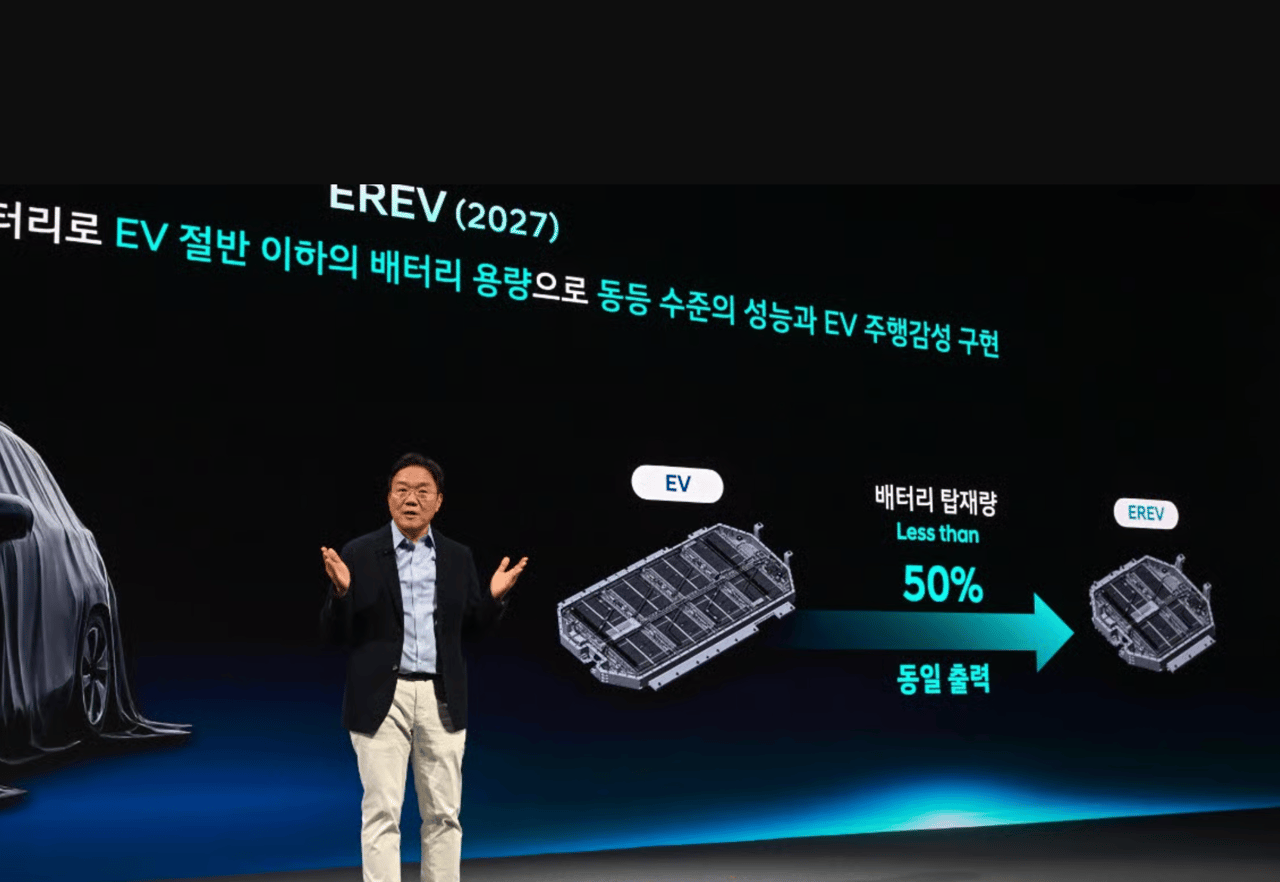
The announcement forms part of a broader electrification strategy that Hyundai laid out at the event.Image: Hyundai.
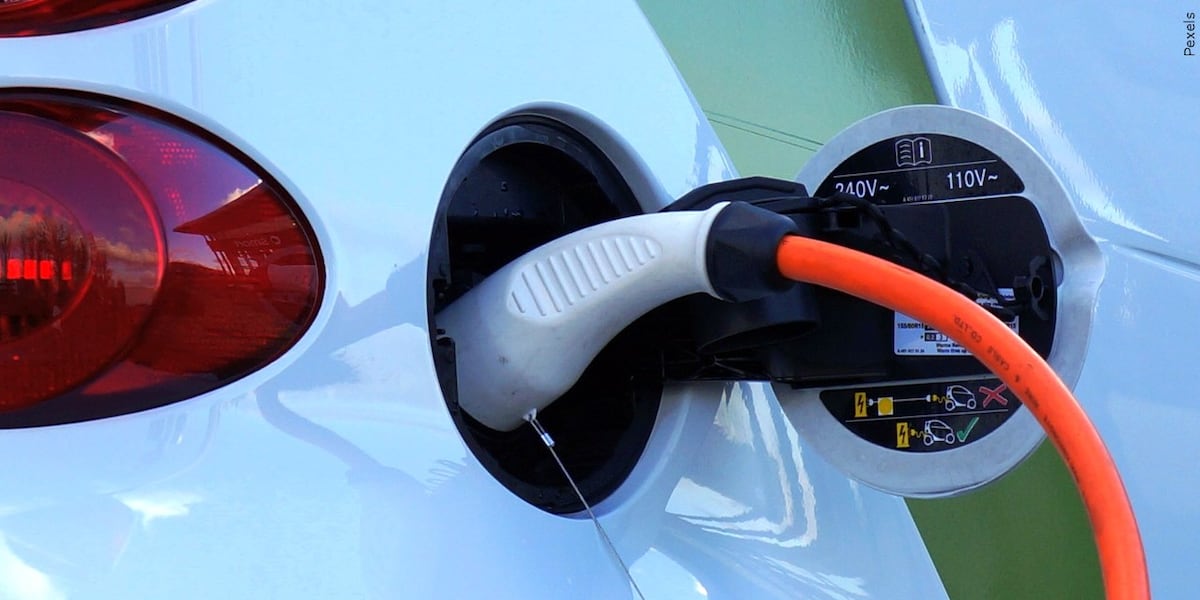
Hyundai Motor Company has revealed in-house developed battery cells that deliver more than double the output of the high-nickel cells it previously used, while cutting charging time by 40%, as part of its 2026 CEO Investor Day held in Seoul, South Korea.
The announcement forms part of a broader electrification strategy that Hyundai laid out at the event, alongside targets of 5.55 million global vehicle sales by 2030 and an operating profit margin above 9%.
The new cells will first be applied to the company’s Extended Range Electric Vehicle (EREV) models, which are expected to arrive in the first half of 2027. Hyundai said these models will use less than half the battery capacity of a comparable full-electric vehicle while delivering equivalent battery performance and EV driving dynamics.
Separately, EV models launching in 2027 will use mid-nickel NCM cells, which Hyundai said reduce battery cost by around 30% while maintaining performance under real-world driving conditions.
Alongside the new cell chemistry, Hyundai detailed a cloud-based battery management system (BMS) upgrade intended to extend battery life by an average of 20% by 2028, and a new safety technology called Thermal Runaway Protection (TRP), which blocks the transfer of heat between adjacent cells in the event of a battery fire using a dissipation-focused battery system and a barrier structure between cells.
Hyundai said existing industry approaches could only delay heat transfer for a period, whereas TRP is designed to block it at the source regardless of battery type. The company said it has verified TRP through more than 200 repeated tests on prismatic and pouch NCM batteries, with the technology debuting on the Genesis GV90.
Faster charging has been a consistent theme across Hyundai’s recent technology announcements beyond the new cells themselves.
In June, Hyundai Motor Company Australia (HMCA) completed the country’s first vehicle-to-grid (V2G) discharge using the ISO 15118-20 communication standard, pairing an IONIQ 9 with StarCharge’s Halo bidirectional DC charger.
HMCA chief executive Don Romano said at the time that getting the standard right was essential because V2G would only scale in Australia if consumers, energy providers and governments could trust the technology, positioning that trial as groundwork for the kind of bidirectional, software-managed charging Hyundai is now building into its wider vehicle lineup.
That direction extends to smart charging more broadly. In August, Hyundai Motor Group partnered with energy intelligence platform Kaluza to co-develop smart charging capabilities integrated into the myHyundai and Kia apps, with the UK the first market for deployment, followed by Australia.
Kaluza chief executive Stephen Fitzpatrick described the partnership as laying the foundation for V2G services planned from 2027, designed to let vehicles charge automatically when renewable energy generation is high and prices are low.
The 40% charging-speed improvement Hyundai has claimed for its new cells stands against a backdrop of growing industry attention to how well batteries actually perform once vehicles reach the used market.
Independent testing by UK diagnostics firm Generational recently found that around 1 in 85 used EVs carries a hidden cell-level imbalance not visible through standard State of Health (SoH) reporting, a fault that can affect range, charging behaviour and long-term value without triggering any dashboard warning.
Hyundai’s cloud-based BMS upgrade, designed to detect early signs of cell abnormality in real time, addresses a risk category similar to the one Generational’s testing identified, though on newer vehicles rather than the used fleet covered by Generational’s dataset.
Hyundai’s own account of its battery strategy traces back through its independently developed hybrid systems and its global Electric-Global Modular Platform (E-GMP), which underpins the IONIQ 9 used in the Australian V2G trial.
Read more about:
Search
RECENT PRESS RELEASES
Related Post