Morning Global Markets Outlook Asian and European Market Performance – JUNE 10, 2026

July 10, 2026

Morning Global Markets Outlook

Asian and European Market Performance


JULY 10, 2026


Published by: StockWatchIndex Editorial Team

Rainer Poertner, Chief Analyst


Asian and European Markets Matter to U.S. Investors


The closing performance of the major Asian and European stock markets often sets the tone for the U.S. trading session. While U.S. markets ultimately respond to domestic economic data, corporate earnings, and Federal Reserve policy, the strength or weakness of overseas markets often influences investor sentiment before the opening bell on Wall Street. While overseas weakness does not guarantee a lower U.S. close, back-to-back declines across both Asia and Europe typically warrant closer attention, as they often reflect changes in global institutional investor sentiment rather than isolated regional events.


Asian Markets: The First Global Signal


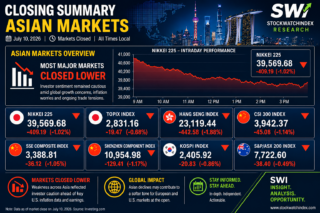
·     Selling broadened across Asia, with every major market finishing lower for a second consecutive session.

·     Hong Kong’s Hang Seng Index experienced the largest decline among the major indices, reflecting continued weakness in Chinese technology and property-related shares.

·     Mainland Chinese equities also weakened, with both the CSI 300 and Shanghai/Shenzhen indices extending recent losses, suggesting investors remain cautious toward China’s economic outlook.

·     Japan’s Nikkei 225 fell for another session, although the percentage decline was more moderate than in Hong Kong.

·     South Korea (KOSPI) and Australia (S&P/ASX 200) also moved lower, indicating that selling pressure was broad-based rather than confined to one market.


What It Means for U.S. Markets

The second consecutive day of broad declines across Asia suggests that global investors remain in a risk-off mindset. While Asian markets alone do not determine the direction of U.S. trading, persistent weakness often:


·     Increases the likelihood of a softer U.S. opening.

·     Weighs on multinational companies with significant Asian revenue exposure.

·     Signals continued concerns about global economic growth and corporate earnings.

·     Encourages investors to shift toward defensive sectors until market sentiment improves.


If European markets also close lower today, it would reinforce the global risk-off environment and could increase volatility during the U.S. trading session. Conversely, a strong European recovery could offset some of the negative sentiment carried over from Asia.


What Changed Since Yesterday

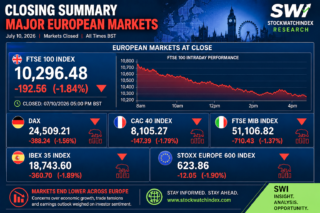
European markets recorded a second consecutive day of declines, confirming that investors remain cautious rather than viewing Thursday’s selloff as a one-day event.


·     The FTSE 100 continued to weaken, falling below the 10,300 level as selling broadened across multiple sectors.

·     Germany’s DAX extended its decline, indicating continued pressure on Europe’s largest economy and its export-oriented companies.

·     France’s CAC 40 also moved lower, reflecting persistent weakness in industrials, luxury goods, and financial shares.

·     Italy’s FTSE MIB remained one of the weakest-performing major European indices, highlighting ongoing concerns about economically sensitive sectors.

·     Spain’s IBEX 35 extended losses, while the STOXX Europe 600 showed that weakness remained widespread across the continent rather than isolated to a few markets.


Unlike a single-session decline, two consecutive days of broad-based weakness often indicate that institutional investors are becoming more defensive rather than simply taking short-term profits. Combined with another weak session in Asian markets, Europe’s continued decline reinforces a global risk-off environmen