Asian and European Market Performance
JUNE 8, 2026
|
|
Published by: StockWatchIndex Editorial Team
Rainer Poertner, Chief Analyst
|
Why Asian and European Markets Matter to the U.S. Investors
World Markets Are More Connected Than Ever
The closing performance of the major Asian and European stock markets often sets the tone for the U.S. trading session. While U.S. markets ultimately respond to domestic economic data, corporate earnings, and Federal Reserve policy, the strength or weakness of overseas markets often influences investor sentiment before the opening bell on Wall Street.
Why Investors Should Monitor Asian and European Markets
· Gauge global investor sentiment before U.S. markets open.
· Identify whether market moves are isolated or part of a broader worldwide trend.
· Better anticipate potential volatility during the U.S. trading session.
· Understand how macroeconomic events are affecting international capital flows.
· Prepare for sector-specific opportunities or risks before the opening bell. |
|
Asian Markets: The First Global Signal
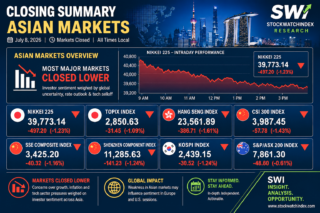
Asian markets are the first major equity markets to trade each day. A broad decline across Japan, China, Hong Kong, South Korea, and Australia can signal growing concerns about global economic growth, trade, geopolitical developments, interest rates, or investor risk appetite. Large declines in Asian markets often lead investors worldwide to reduce exposure to risk assets before European markets even open. Conversely, strong gains can increase confidence and encourage buying in other regions. |
|
European Markets: A Real-Time Indicator
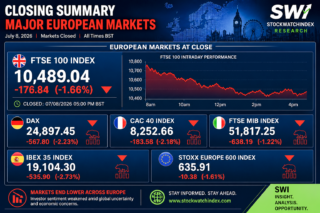
By the time U.S. investors begin trading, European markets have been open for several hours. The performance of major indices such as the FTSE 100, DAX, CAC 40, FTSE MIB, IBEX 35, and STOXX Europe 600 provides one of the clearest indications of how institutional investors are interpreting overnight developments. When most major European indices are declining simultaneously, it often reflects broad-based risk aversion rather than isolated regional weakness. This can increase the probability of a weaker U.S. market open as global portfolio managers adjust positions across international markets.
Markets Are More Connected Than Ever
Today’s financial markets operate as a highly interconnected global system. Large institutional investors, hedge funds, pension funds, and sovereign wealth funds continuously allocate capital across North America, Europe, and Asia. As a result, significant moves in one region frequently influence trading decisions in others. Although overseas market performance does not determine how the U.S. market will close, it provides valuable context that can help investors understand market psychology, assess risk, and identify potential opportunities before trading begins. For investors looking for an informational edge, tracking the closing performance of Asian and European markets helps assess the likely direction, volatility, and risk environment for U.S. equities each trading day. |
|