White House Pushed SpaceX and Blue Origin Out of Paris Summit to Protect Starlink
September 4, 2026
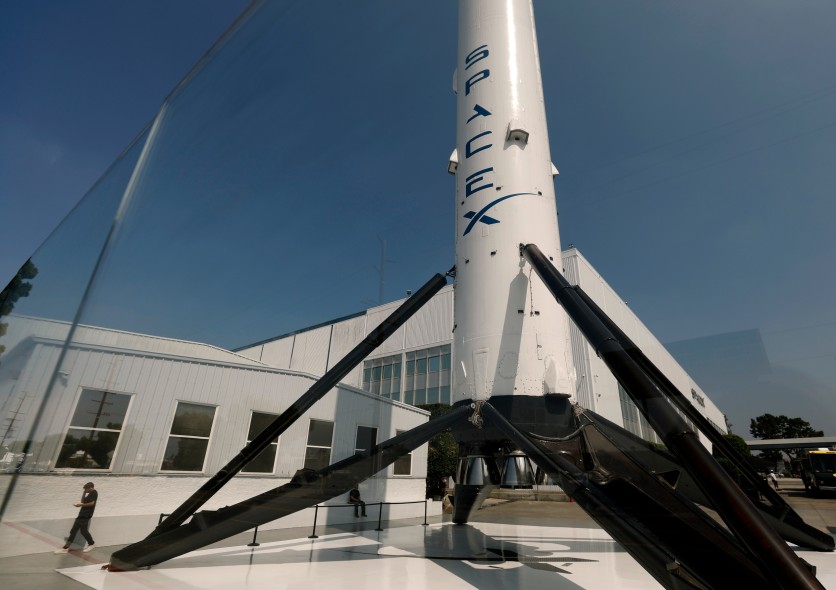
Justin Sullivan/GettyImages.com
Four days before the world’s most consequential space summit is scheduled to open in Paris, Washington did something that crossed a line it has not crossed before: it informally but unmistakably ordered private aerospace companies to stay away.
SpaceX, Blue Origin, rocket manufacturer Stoke Space, and orbital data-center startup Starcloud notified French authorities on September 3 that they would not attend the International Space Summit on September 9–10, 2026 at the Grand Palais — after an official from the White House Office of Science and Technology Policy held a private call with US aerospace executives approximately a week earlier and made clear that attendance could be interpreted as an endorsement of European Union policy positions that Washington opposes. The OSTP official told industry representatives that France had organized the summit without consulting the United States, accused Paris of pursuing “anti-competitive practices,” and suggested the event’s panel structure was designed to marginalize American interests. No formal directive was issued; the companies read the message clearly anyway.
The summit, co-chaired by France and Germany, was designed to gather heads of state, military officials, scientists, and private sector leaders from approximately 120 foreign delegations for two days of discussion on four priorities: space security and sustainability, governance of low-Earth orbit crowding caused by mega-constellations, the future of the space economy, and Moon exploration. Speeches by French President Emmanuel Macron and European Commission President Ursula von der Leyen are still scheduled. The summit will proceed.
But the departure of SpaceX and Blue Origin — the world’s two dominant commercial launch operators — is not a scheduling inconvenience. It is a signal about which forums Washington is now prepared to block from influencing the governance of orbit.
What the OSTP Was Actually Protecting
To understand why the White House moved against a French conference, it helps to understand what the conference was actually threatening.
Low Earth orbit — the belt of space from roughly 160 to 2,000 kilometers (100 to 1,240 miles) above Earth — is the most commercially contested region in the solar system. As of mid-2026, more than 18,000 active satellites are operating there. SpaceX’s Starlink constellation accounts for approximately 10,600 of them — roughly 59 percent of every active satellite in orbit — and the company holds FCC authorization for up to 15,000 second-generation satellites beyond that.
This is not merely market dominance. It is structural leverage over any international effort to write binding rules for the orbital environment — rules covering spectrum coordination, satellite deorbit timelines, collision-avoidance obligations, and orbital slot allocation. Right now, none of those rules are legally binding at the international level. The ITU coordinates spectrum through a first-come, first-served registration process that has no enforcement mechanism for a mega-constellation operator that pushes the boundaries of what it filed. The FCC requires US-licensed satellites to deorbit within five years of operational end; no equivalent binding international standard exists. In January 2026, the FAA withdrew the 25-year deorbit rule under industry pressure, citing conflicts with the FCC’s five-year rule and objections from SpaceX, Rocket Lab, and the Satellite Industry Association.
For SpaceX, this regulatory vacuum is worth more than any single contract. A company operating roughly 59 percent of active LEO satellites has an overwhelming interest in preventing the formation of binding international norms — particularly at a forum organized by countries that have explicitly refused to sign the US-drafted Artemis Accords, the bilateral framework that effectively encodes American governance preferences into bilateral space agreements with willing partners.
France and Germany, notably, have not signed the Artemis Accords. The European Space Agency has not signed them as an institution. The Paris summit was conceived, at least partly, as an alternative architecture for multilateral space dialogue — one not organized around American preferences. That is the “anti-competitive practices” the OSTP official was describing. Not unfair trade. Governance competition.
The OSTP’s “Commercial-First” Doctrine
The official who hosted the call discouraging companies from attending the Paris summit operates within an institutional doctrine that was made explicit just two weeks earlier.
On August 20, 2026, President Trump signed National Security Presidential Memorandum 17 — the new National Space Transportation Policy — superseding an Obama-era directive from 2013. OSTP Director Michael Kratsios, confirmed by the Senate in a 74-25 bipartisan vote in March 2025 and a former US Chief Technology Officer who led the American AI Initiative under Trump’s first term, described the policy as a “commercial-first approach enabling Americans on the Moon by 2028” and “positioning America to lead the next era of space.” The memorandum targets more than 1,000 annual launches and reentries by 2030 — up from 178 in 2025, a figure already ten times higher than in 2013 — and instructs federal agencies to refrain from activities that “preclude, discourage, or compete with United States commercial space transportation activities.”
That language is not incidental. Directing government agencies to protect US commercial operators from competition is formally consistent with OSTP then warning those same commercial operators away from a European forum that might, among other things, produce governance frameworks constraining what those operators can do in orbit.
Kratsios also told industry representatives, according to sources cited by Politico Europe, that the Paris summit was structured to “diminish US industry efforts” — phrasing that reads differently once you know that the summit’s LEO governance agenda is specifically about setting rules for the kind of mega-constellation Starlink represents. The ITU spectrum fight underlying all of this has been building for years; Paris was designed to accelerate it.
What Was Lost Before the Summit Started
SpaceX’s absence is explicable on pure business logic. Its interest in the summit’s LEO governance agenda is the interest of a company that wants those governance conversations not to happen — or at least not to happen in a venue it cannot control. A company that just completed the largest IPO in history, listed on Nasdaq in June at a valuation of approximately $1.77 trillion, does not need the reputational cover of European space diplomacy. It needs the governance vacuum to persist.
Blue Origin’s calculation is different. Jeff Bezos’s company has been publicly funding its operations out of his personal Amazon stock sales for 26 years; in July 2026 it opened its first-ever outside fundraising round, seeking $10 billion at a $130 billion valuation, with hedge fund Coatue Management leading a $4 billion commitment. It is competing for NASA contracts, recovering from a New Glenn rocket launchpad explosion in late May 2026 that damaged the facility and set back its schedule. A company in that position — newly dependent on outside investors and federal contracts — does not attend a forum the White House has signaled it opposes.
Stoke Space, a Kent, Washington-based developer of fully reusable rockets that has raised $860 million in Series D financing, and Starcloud, a Redmond, Washington-based startup developing orbital data centers powered by constant solar energy, represent the next generation of American commercial space ventures. For both, federal relations and contract access are structurally existential. Their withdrawal required no deliberation.
One source familiar with the Paris summit’s agenda confirmed to Reuters that some commercial announcements between European and US companies that had been planned for release at the event were subsequently canceled. The French Ministry of Higher Education, Research and Space confirmed the withdrawals, with a spokesperson telling Agence France-Presse that the situation was difficult not to connect to “the rumours of pressure” — and offered a notably restrained but pointed summary of what bilateral space relations had become: Washington and Paris wanted to continue working together, the spokesperson said, “even though strategic about-turns and political pressures sometimes make the task needlessly complex.”
What Europe Is Doing About It
France did not organize this summit in a vacuum. Its investment in space independence — military and civil — has accelerated in direct proportion to its anxiety about American commercial satellite dominance.
In November 2025, at the inauguration of France’s fully operational Space Command in Toulouse, Macron announced an additional €4.2 billion (approximately $4.9 billion) in military space spending between 2026 and 2030 — a roughly 70 percent increase over the €6 billion already committed under France’s Military Program Law — bringing France’s total planned military space budget for that period to approximately €10.2 billion (approximately $11.9 billion). Macron also pledged approximately €16 billion (approximately $18.6 billion) through 2030 for civil space programs, an increase of roughly 30 percent over current expenditure.
He did not mince his framing. “Space is no longer a sanctuary,” Macron said at the ceremony. “It has become a battlefield.” He added that “France and Europe will not simply submit to rules imposed by others. We will write them with our European allies.”
The EU has backed that posture with concrete investment. The Iris² program — Infrastructure for Resilience, Interconnectivity and Security by Satellite — contracted in December 2024 with the SpaceRISE consortium (led by satellite operators SES, Eutelsat, and Hispasat), plans a 290-satellite constellation in low and medium Earth orbit, combining LEO and MEO assets, at an estimated cost of approximately €10 billion (approximately $11.6 billion), with the EU acting as “anchor customer.” Iris² will provide encrypted connectivity specifically designed for government and military users — the class of service Starlink cannot credibly offer to European governments given the jurisdictional questions surrounding Elon Musk’s relationship with the US government and Starlink’s documented role in conflict zones.
European industry, meanwhile, is pushing to accelerate. Alliance NewSpace France, which represents more than forty French space startups, and Germany’s aerospace industry have been pressing the European Commission to function as a reliable long-term institutional customer for domestic launch services — explicitly aimed at reducing reliance on American providers. The Paris summit was meant to be the diplomatic umbrella under which those industry positions could reach a global audience.
A Pattern Washington Is Establishing
What happened in the days before the Paris summit is not, in isolation, a bilateral diplomatic incident between the United States and France. It is an example of a tactic — using informal government pressure on private companies to shape the terms of multilateral engagement without triggering the formal diplomatic and legal consequences of overt government action.
This approach — call it industrial statecraft below the threshold of policy — has a precedent in tech export controls and chip-access restrictions, where the US government has used regulatory authority over private companies to advance foreign policy objectives. What is new here is the direction of travel: rather than restricting what companies may sell to whom, Washington is discouraging what companies may attend and with whom they may associate in a governance conversation.
The consequences extend past this particular summit. If US companies face consistent informal discouragement from participating in European-organized forums on orbital governance, spectrum coordination, and satellite broadband rules, the ability to negotiate those rules in good faith across the Atlantic narrows significantly. Satellite servicing agreements, joint launch contracts, cross-border data relay services — all of these depend on a baseline of diplomatic common ground that is now visibly eroding.
The Paris summit, scheduled for September 9–10 at the Grand Palais, will take place. It will convene Macron, von der Leyen, 120 delegations, and a set of governance questions about what orbit is allowed to become. SpaceX will not be there. That absence tells us something important about who benefits from leaving those questions unanswered.
How Does LEO Governance Actually Work — and Why Does It Matter Who Writes the Rules?
Low Earth orbit is governed by a patchwork of national regulators (the FCC in the US, ARCEP in France, ISED in Canada) and international voluntary frameworks (the ITU for spectrum, the IADC for debris coordination) that were designed for an era when a few dozen satellites competed for orbital slots. None of those frameworks anticipated a single commercial operator holding roughly 59 percent of all active satellites. The FCC’s five-year deorbit mandate is binding for US-licensed operators; there is no equivalent international treaty obligation. The ITU’s spectrum coordination is first-come, first-served, with no cap on how much spectrum a single operator can file to use. In January 2026, the FAA withdrew its proposed 25-year satellite deorbit rule under industry pressure, citing conflicts with the FCC’s five-year rule and objections from SpaceX, Rocket Lab, and the Satellite Industry Association. The result is a regulatory environment in which the dominant operator has the most to gain from preventing the emergence of binding international standards — and the US government, through OSTP and NSPM-17, has now aligned its commercial-first space doctrine with exactly that interest.
For the EU’s Iris², for Blue Origin’s commercial satellite ambitions, and for any country hoping to build independent satellite broadband capacity — these are not abstract governance questions. They determine who gets to use which frequencies, in which orbital shells, with what collision-avoidance obligations, for the next two decades.
The Paris summit was scheduled to discuss exactly these questions. The White House made sure America’s most powerful commercial space companies would not be in the room when it did.
All currency conversions from euros are approximate, based on the EUR/USD mid-market rate of 1.1627 as of September 4, 2026, and are subject to change.
Why did SpaceX and Blue Origin withdraw from the Paris summit?
Both companies notified French authorities on September 3, 2026 that they were canceling their participation. Reporting by Politico Europe, corroborated by Reuters and AFP, indicates that a White House OSTP official held a private call with US aerospace executives approximately a week before the summit and said attendance could be interpreted as an endorsement of European policy positions that Washington opposes. The official also accused France of organizing the summit without consulting the US and of pursuing “anti-competitive practices.” While no formal order was issued, the companies — all of which depend on federal contracts and regulatory goodwill — interpreted the message as a clear discouragement and acted accordingly.
What authority does OSTP have over private aerospace companies?
OSTP has no formal legal authority to direct private companies to skip a conference. What it has is enormous informal leverage: the companies involved — SpaceX, Blue Origin, Stoke Space, and Starcloud — operate within a federal regulatory and contracting ecosystem where OSTP’s institutional goodwill directly affects their ability to win NASA contracts, receive FCC spectrum authorizations, and obtain FAA launch licenses. OSTP Director Michael Kratsios, a former US Chief Technology Officer and one-time managing director of Scale AI, oversees the administration’s “commercial-first” space doctrine enshrined in the August 2026 National Space Transportation Policy. When an official with that portfolio makes a “strong suggestion,” aerospace executives recognize what kind of suggestion it is.
What is the EU’s Iris² satellite constellation and why is it relevant?
Iris² — Infrastructure for Resilience, Interconnectivity and Security by Satellite — is a €10 billion (approximately $11.6 billion) EU satellite internet program contracted in December 2024, designed to provide secure broadband connectivity for European governments and militaries without dependence on American networks. Its 290-satellite constellation in low and medium Earth orbit is explicitly intended as an alternative to Starlink for high-security government applications. Iris² is one reason the White House OSTP accused Paris of “anti-competitive practices”: France’s push for European satellite sovereignty is a direct commercial threat to SpaceX’s dominant position in the satellite broadband market, where Starlink currently holds approximately 59 percent of all active LEO satellites. The Paris summit’s governance agenda — setting rules for how mega-constellations operate in LEO — is the regulatory arena where that commercial competition gets decided.
Will the summit still matter without SpaceX and Blue Origin?
Yes — and in some ways the withdrawal makes the summit’s outcome more consequential. The summit will proceed with approximately 120 foreign delegations, co-chaired by France and Germany, with Macron and European Commission President Ursula von der Leyen speaking. Its agenda — space security, LEO congestion governance, the space economy, and Moon exploration — addresses issues that European, Asian, and other space agencies must resolve regardless of whether US commercial operators participate. The absence of SpaceX, which controls roughly 59 percent of active LEO satellites and is the entity with the greatest operational exposure to new orbital governance rules, means the forum will produce frameworks and declarations without input from the company most affected by them — and potentially in tension with American commercial interests. That gap may ultimately accelerate rather than slow the divergence between US and European approaches to who governs orbit.
Search
RECENT PRESS RELEASES
Related Post